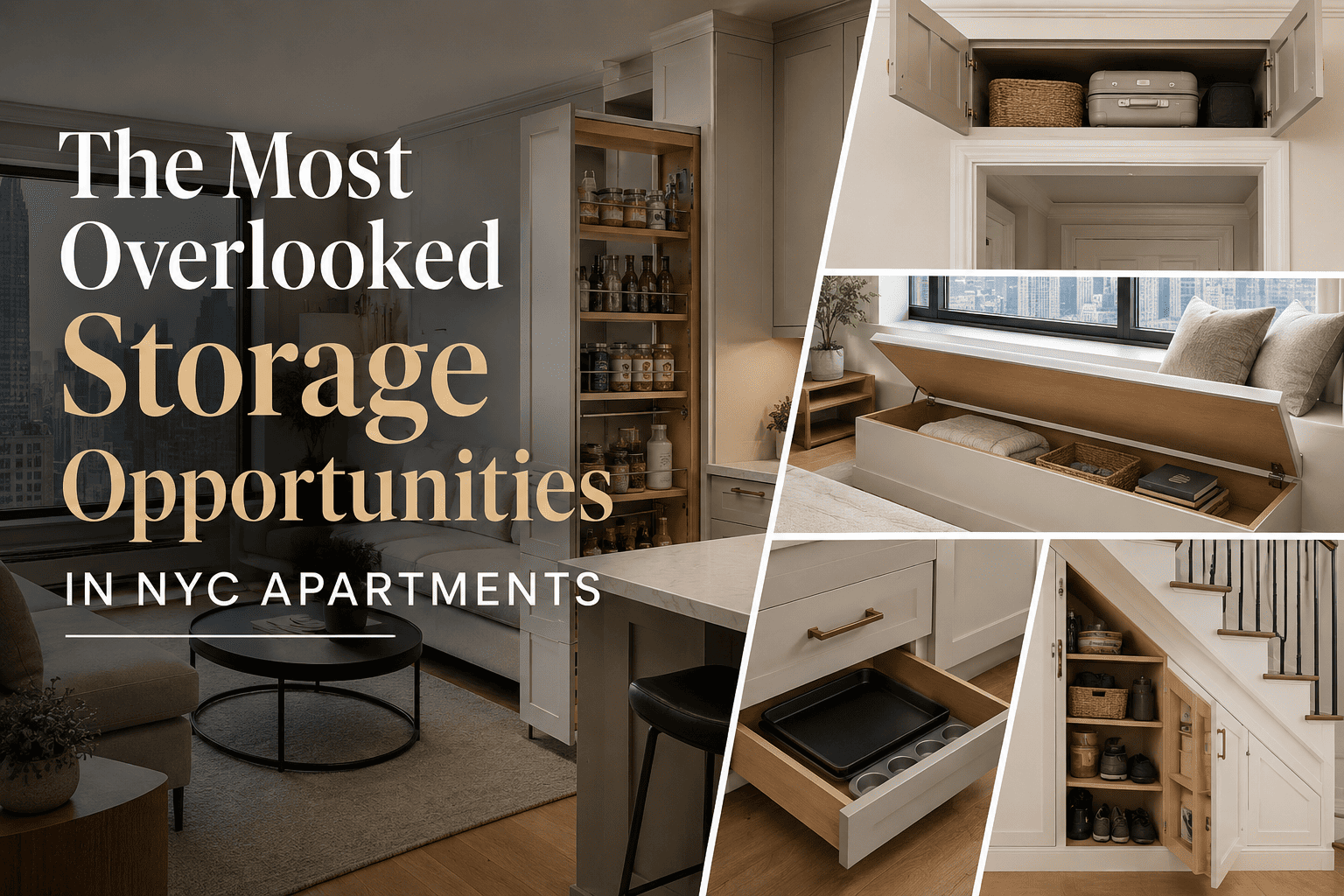
Many NYC homeowners assume they need more space when what they actually need is better storage.
In many cases, the most valuable storage opportunities are already there—they simply haven’t been incorporated into the design.
Why Storage Often Matters More Than Square Footage
Clutter accumulates when everyday items don’t have designated places. Seasonal items end up occupying closets, kitchen cabinets become overcrowded, and bathrooms struggle to accommodate basic necessities.
We at Klein Kitchen and Bath have worked in apartments where a thoughtful redesign added significantly more functional storage without increasing the apartment’s footprint by a single square foot. Whether you’re planning a kitchen renovation, bathroom remodel, or full apartment renovation, identifying these overlooked opportunities can dramatically improve how your home functions every day.
That’s why storage planning is often one of the most important parts of a successful renovation.
The Space Above Doorways
One of the most overlooked storage opportunities in Manhattan apartments is the area above interior doorways.
In many older buildings, ceilings are high enough to accommodate custom cabinetry or shelving above bedroom, bathroom, hallway, and closet doors.
Because these areas are located outside the normal line of sight, they can provide valuable storage without making a room feel crowded.
They’re particularly useful for:
Seasonal decorations
-
Travel items
-
Luggage
-
Extra linens
-
Infrequently used household items
When integrated into custom millwork, these storage areas often feel like part of the original architecture rather than an afterthought.
Toe-Kick Drawers Beneath Kitchen Cabinets
Most homeowners never realize that the recessed area beneath kitchen cabinets can be transformed into functional storage.
Known as toe-kick drawers, these shallow pull-out compartments make use of space that would otherwise remain empty.
They’re often ideal for storing baking sheets, serving trays, placemats, kitchen linens, and even pet supplies that can otherwise clutter cabinets and drawers.
In smaller Manhattan kitchens where every inch matters, toe-kick storage can provide surprisingly useful additional capacity without affecting cabinet layouts.
Custom Pantry Solutions for Narrow Kitchens
Many NYC kitchens lack the space for traditional walk-in pantries.
However, that doesn’t mean pantry storage isn’t possible.
Narrow pull-out pantry cabinets, floor-to-ceiling pantry systems, and integrated storage towers can often accommodate significantly more storage than conventional cabinetry.
During kitchen renovations, we frequently find opportunities to create storage solutions within areas that homeowners previously assumed were unusable. Speak to us to hear more!
Built-In Banquettes With Hidden Storage
Dining areas can work harder than many homeowners realize.
Custom banquette seating can provide comfortable dining space while concealing substantial storage beneath the seating area.
These compartments are particularly useful for:
-
Holiday serving pieces
-
Small appliances
-
Children’s items
-
Table linens
-
Seasonal décor
Because the storage is integrated directly into the seating, it doesn’t occupy additional floor space elsewhere in the apartment.
Recessed Medicine Cabinets
Recessed medicine cabinets offer a cleaner appearance while creating additional storage within the wall cavity itself.
Although the difference may seem modest, every inch matters in smaller bathrooms.
Combined with thoughtfully designed vanity storage, recessed cabinetry can significantly improve bathroom organization without increasing the room’s footprint.
Window Seats That Double as Storage
Bay windows, alcoves, and underutilized wall sections often present opportunities for custom window seating.
Beyond creating a comfortable place to sit, these built-ins can conceal substantial storage underneath.
Depending on the design, window-seat storage can accommodate:
-
Books
-
Blankets
-
Children’s toys
-
Seasonal items
-
Miscellaneous household belongings
This type of storage works particularly well in apartments where additional furniture would otherwise make the room feel crowded.
Under-Stair Storage in Duplex Apartments
For homeowners living in duplex apartments or townhouses, staircases often contain untapped storage potential.
Custom cabinetry, drawers, pull-outs, and enclosed storage compartments can transform otherwise unused space into highly functional storage.
Depending on the layout, these compartments can store everything from cleaning supplies and sports equipment to luggage, pantry overflow, and other everyday household essentials.
Because the space already exists, the improvement often feels seamless once completed.
Custom Millwork Around Radiators
Radiators are a common feature in many Manhattan apartments.
While homeowners often view them as obstacles, they can sometimes become part of a larger storage solution.
Custom millwork can incorporate bookshelves, display areas, cabinetry, window seating, and other built-in furniture that makes the surrounding space more functional.
The goal isn’t simply to conceal the radiator. It’s to make the surrounding area work more effectively within the overall design.
Floor-to-Ceiling Cabinetry
One of the biggest storage mistakes we see is stopping cabinetry well below the ceiling.
In apartments where storage is limited, upper cabinets often become valuable real estate.
Floor-to-ceiling cabinetry can dramatically increase storage capacity while creating a cleaner and more integrated appearance.
When properly designed, full-height cabinetry can actually make a room feel larger by reducing visual clutter and creating stronger vertical lines throughout the space.
This approach is particularly effective in kitchens, entryways, mudrooms, laundry areas, and primary bedrooms.
Storage Should Be Part of the Design Process
One of the biggest differences between a standard renovation and a thoughtfully planned renovation is that storage is considered from the beginning rather than added later.
The most successful projects are the ones where every part of the home has a purpose.
During the design process, opportunities often emerge that homeowners never knew existed—from hidden cabinetry and integrated millwork to layout adjustments that dramatically improve storage without affecting the overall footprint of the apartment.
Final Thoughts
At Klein Kitchen and Bath, we’ve found that some of the most valuable storage opportunities are often the ones homeowners don’t initially see. During the design phase of kitchen remodels, bathroom renovations, and full apartment transformations, identifying underutilized areas frequently allows us to add significant storage without altering the apartment’s footprint.
The most successful renovations treat storage as part of the overall design strategy rather than an afterthought. By evaluating how a space is used every day and incorporating custom solutions from the beginning, homeowners can achieve a more organized, functional, and comfortable home while making the most of every square foot.
Frequently Asked Questions About Storage Solutions for NYC Apartments
What is the best way to add storage to a small NYC apartment?
The most effective storage solutions are often built into the apartment itself. Custom cabinetry, floor-to-ceiling storage, built-in seating, recessed storage, and carefully planned millwork can create significant additional storage without taking up valuable living space.
Do floor-to-ceiling cabinets make a room look smaller?
Not necessarily. When designed properly, floor-to-ceiling cabinetry can actually make a room feel larger by drawing the eye upward, reducing visual clutter, and creating a more streamlined appearance throughout the space.
Are built-in storage solutions worth it in a renovation?
For many NYC homeowners, built-in storage is one of the most valuable investments in a renovation. Unlike standalone furniture, custom storage solutions are designed specifically for the space and often maximize areas that would otherwise go unused.
What are some commonly overlooked storage opportunities in apartments?
Some of the most overlooked areas include the space above doorways, beneath banquette seating, under staircases, inside window seats, beneath kitchen cabinetry, and around existing architectural features such as radiators and alcoves.
Should storage planning be part of the renovation design process?
Absolutely. The most successful renovations consider storage from the beginning rather than treating it as an afterthought. At Klein Kitchen and Bath, storage planning is incorporated into the design process from the earliest stages, allowing opportunities for custom cabinetry, built-ins, millwork, and layout improvements to be identified before construction begins. This often creates a more functional, organized, and comfortable living environment without requiring additional square footage.