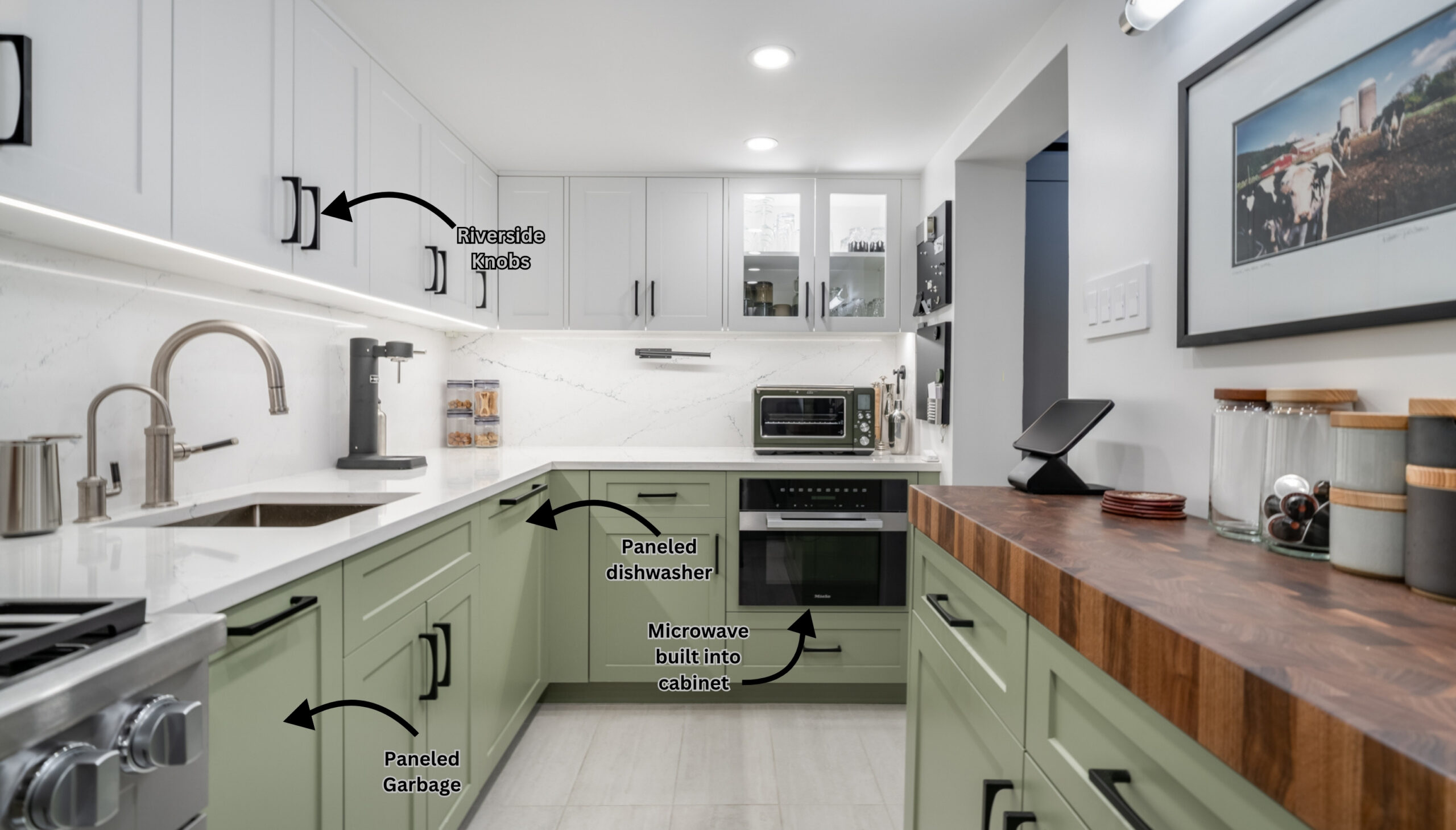
Custom kitchen cabinets are designed and fabricated to project-specific specifications. Semi-custom cabinets start with a manufacturer’s established cabinet system, with choices of sizes, finishes, storage features, and permitted modifications. For a NYC apartment, the better choice depends on what your kitchen needs that an available cabinet system cannot provide.
That last question matters. An awkward corner, an unusually shallow wall, or a particular appliance arrangement may justify custom cabinetry. But a kitchen does not automatically need fully custom cabinets because it is small, located in an older building, or designed to look luxurious.
The useful comparison starts with the layout, the storage you need, and the details that must work together.
Custom vs. Semi-Custom Cabinets at a Glance
| Consideration | Semi-custom cabinets | Custom cabinets |
|---|---|---|
| Cabinet dimensions | Selected from a manufacturer’s range, with modifications where offered | Specified for the project within fabrication and material constraints |
| Door styles and finishes | Chosen from the cabinet line’s available options | Greater flexibility, depending on the fabricator |
| Interior storage | Selected from compatible accessories and configurations | Can be designed around particular items and routines |
| Unusual spaces | Addressed through available modifications, fillers, panels, and installation details | Can accommodate dimensions or configurations outside a manufacturer’s offering |
| Appliance integration | Must work within the line’s capabilities and appliance specifications | Offers more flexibility, while still following appliance requirements |
| Quality | Depends on the product’s construction, finish, hardware, and installation | Depends on the fabricator’s construction, finish, hardware, and installation |
| Best reason to choose it | The available system meets the design requirements well | A meaningful design requirement falls outside the available system |
Neither category is a quality guarantee. A carefully specified semi-custom kitchen can perform beautifully. Custom cabinetry still needs sound construction, appropriate materials, accurate measurements, and skilled installation.
What Are Semi-Custom Kitchen Cabinets?
Semi-custom cabinets combine an established product range with a defined set of choices.
Depending on the manufacturer and cabinet line, those choices may include door styles, wood species, finishes, cabinet dimensions, interior organizers, and modifications to selected cabinets. The extent of customization varies, so it is important to review the actual specifications.
For example, KraftMaid’s cabinet sizing guide describes its semi-custom offering, while its product specifications provide the details needed to evaluate individual configurations.
The practical question is not simply whether a cabinet is “semi-custom.” It is whether that particular line can deliver the layout and details your kitchen requires.
When semi-custom cabinets make sense
Semi-custom cabinetry is worth considering when:
- The available sizes and modifications fit the proposed layout.
- You can achieve the desired appearance within the finish and door selection.
- Compatible storage accessories meet your needs.
- Appliance panels, finished ends, and trim can be coordinated successfully.
A semi-custom kitchen can still have a highly individual design. The arrangement of drawers, proportions of the cabinetry, lighting, hardware, and surrounding materials all contribute to the finished result.
What Are Custom Kitchen Cabinets?
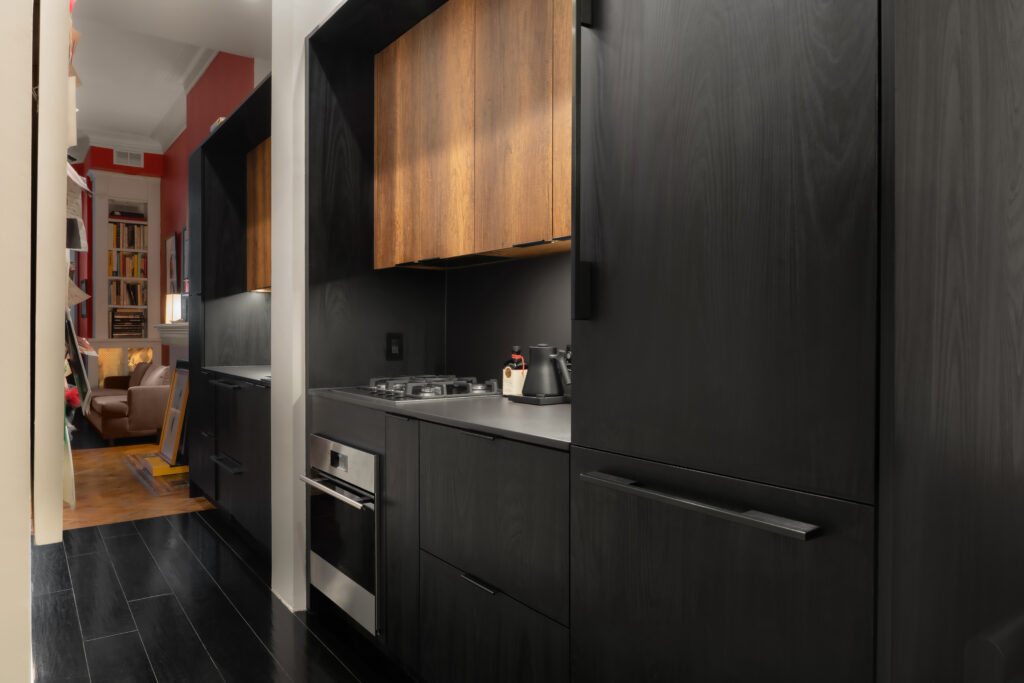
Custom cabinets are fabricated to an agreed set of project specifications rather than selected primarily from a fixed cabinet catalog.
This can provide greater control over dimensions, proportions, interior arrangements, and architectural details. The available options still depend on the fabricator, materials, hardware, and construction methods.
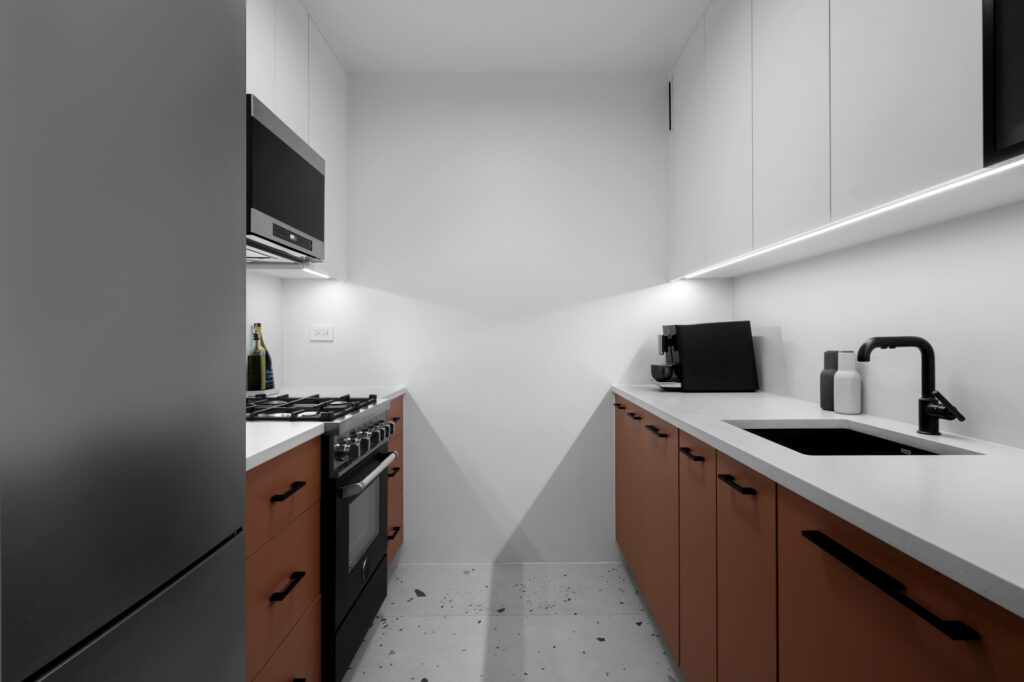
Custom cabinetry becomes especially useful when there is a specific problem to solve: a cabinet depth that a selected manufacturer cannot accommodate, a distinctive built-in arrangement, or a finish and door proportion that needs to coordinate with adjacent millwork.
When custom cabinets make sense
Consider custom cabinetry when:
- An important dimension falls outside the available manufacturer’s options.
- The kitchen needs to integrate closely with adjoining built-ins.
- A particular storage arrangement cannot be achieved with available components.
- The design requires unusual proportions or architectural details.
- A specific finish or material combination is essential to the overall plan.
The strongest reason to choose custom is a clear functional or design benefit you can identify on the drawing.
The NYC Question: What Does Your Apartment Actually Require?
Before choosing cabinetry, establish the conditions the design must accommodate.
In an apartment renovation, the cabinet plan may need to respond to existing services, wall irregularities, ceiling conditions, appliance requirements, and access limitations. These issues affect both custom and semi-custom kitchens.
1. Fit: Look Beyond the Cabinet Width
A cabinet can fit its allocated space and still function poorly.
A drawer may interfere with a perpendicular handle. A refrigerator may need additional clearance to open properly. A wall cabinet may sit too close to a window casing.
The cabinet plan should account for doors, drawers, handles, appliance openings, finished panels, and nearby architectural features.
Custom dimensions do not eliminate the need for installation allowances. Fillers and scribed pieces can serve a purpose, allowing cabinets to operate and meet irregular walls cleanly.
Before treating every filler as wasted space, ask what it is doing.
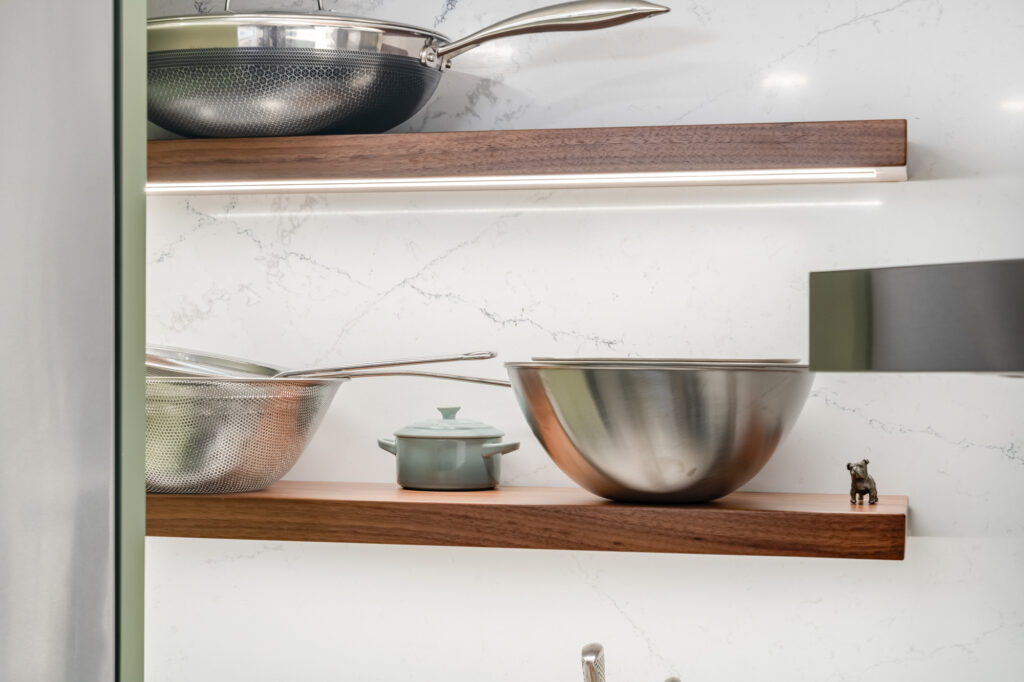
2. Storage: Compare What You Can Reach
More cabinetry does not always mean more useful storage.
A deep cabinet with an awkward opening may be less practical than a narrower drawer bank. An upper cabinet may add capacity while placing everyday items out of comfortable reach.
Compare the proposed designs using your actual belongings:
- Where will pots, pans, and lids go?
- Can you store dishes near the dishwasher?
- Will small appliances stay on the counter or be put away?
- Are frequently used items easy to reach?
- Does the corner solution suit what you plan to store?
For a small NYC kitchen, the important measure is accessible storage—not simply the number of cabinet doors.
3. Ceiling Height: Plan the Entire Composition
Ceiling-height cabinetry requires more than choosing a taller cabinet.
The design must consider ceiling variations, upper-door proportions, trim, lighting, and access to the highest storage. Either custom or semi-custom cabinetry may work, depending on the dimensions and available options.
Ask to see how the cabinets meet the ceiling and how the upper storage will be used.
A taller installation should improve the kitchen’s appearance and function, rather than create difficult-to-reach space without a clear purpose.
4. Appliances: Finalize Specifications Before Ordering
Cabinetry and appliances need to be planned together.
Panel-ready refrigerators, dishwashers, built-in ovens, and ventilation equipment each have installation requirements. Panel dimensions, clearances, ventilation openings, and access must follow the selected appliance’s instructions.
Custom cabinetry can offer flexibility, but it cannot override an appliance manufacturer’s requirements.
Confirm the appliance models before the cabinet order is finalized. Substituting a different model later can affect openings, panels, and surrounding details.
5. Installation and Access: Consider How the Cabinets Arrive
A cabinet drawing should also be buildable and deliverable.
For an apartment project, confirm access through the building, elevator, stairwell, and apartment entrance. Large pantry units or assembled pieces may require a different construction or delivery approach.
Building delivery procedures and installation sequencing should be considered before fabrication or ordering.
These details are part of planning a successful kitchen, whichever cabinet category you choose.
A Better Comparison: Review the Same Kitchen Both Ways
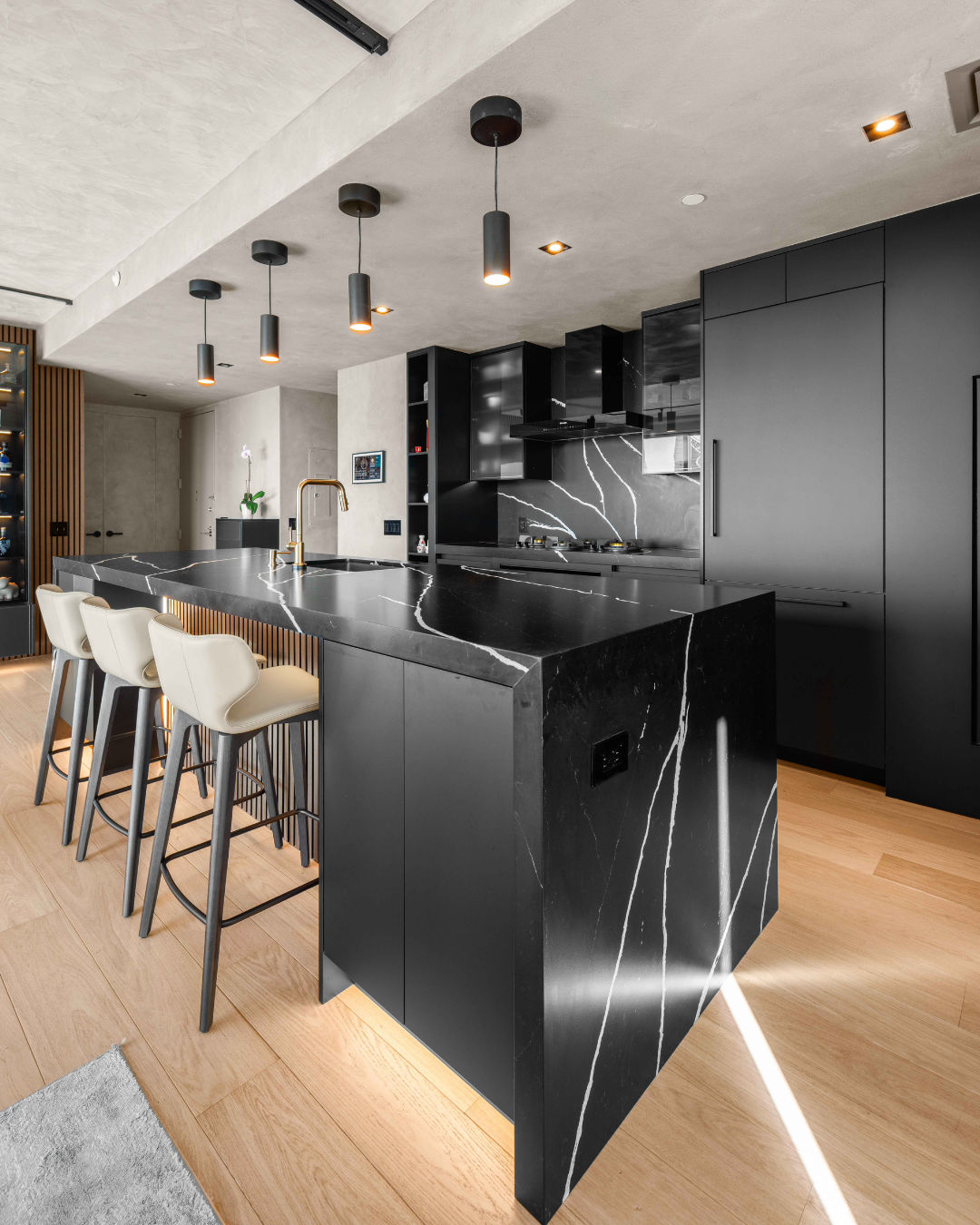
Comparing a custom kitchen in one photograph with a semi-custom kitchen in another tells you very little.
A more useful exercise is to compare how each approach handles the same floor plan.
Ask your designer to identify:
| Question | What the answer should reveal |
|---|---|
| Does either option change the layout? | Whether customization produces a meaningful functional improvement |
| Where are fillers or blank panels needed? | Which are necessary and which might be reduced |
| How much accessible storage does each provide? | Whether the differences matter in daily use |
| Can both accommodate the selected appliances? | Whether integration details are resolved |
| What changes in the finished appearance? | Differences in proportions, trim, materials, and continuity |
If both approaches achieve the same practical result, that is useful information.
If custom cabinetry solves an important limitation, the designer should be able to point to that benefit clearly.
Are Custom Cabinets Always Better Quality?
No. “Custom” describes the degree of project-specific fabrication; it does not establish a universal construction standard.
When comparing cabinetry, review the actual specifications:
- Cabinet box and back construction.
- Door and drawer-front materials.
- Drawer construction and hardware.
- Hinge operation and adjustment.
- Finish characteristics and care requirements.
- Warranty terms and replacement support.
Material selection should suit the application. A material that works well for a painted door may differ from the best choice for a wood-grain finish.
Ask what is being specified, why it suits the design, and how it should be maintained.
Can Semi-Custom Cabinets Look Built In?
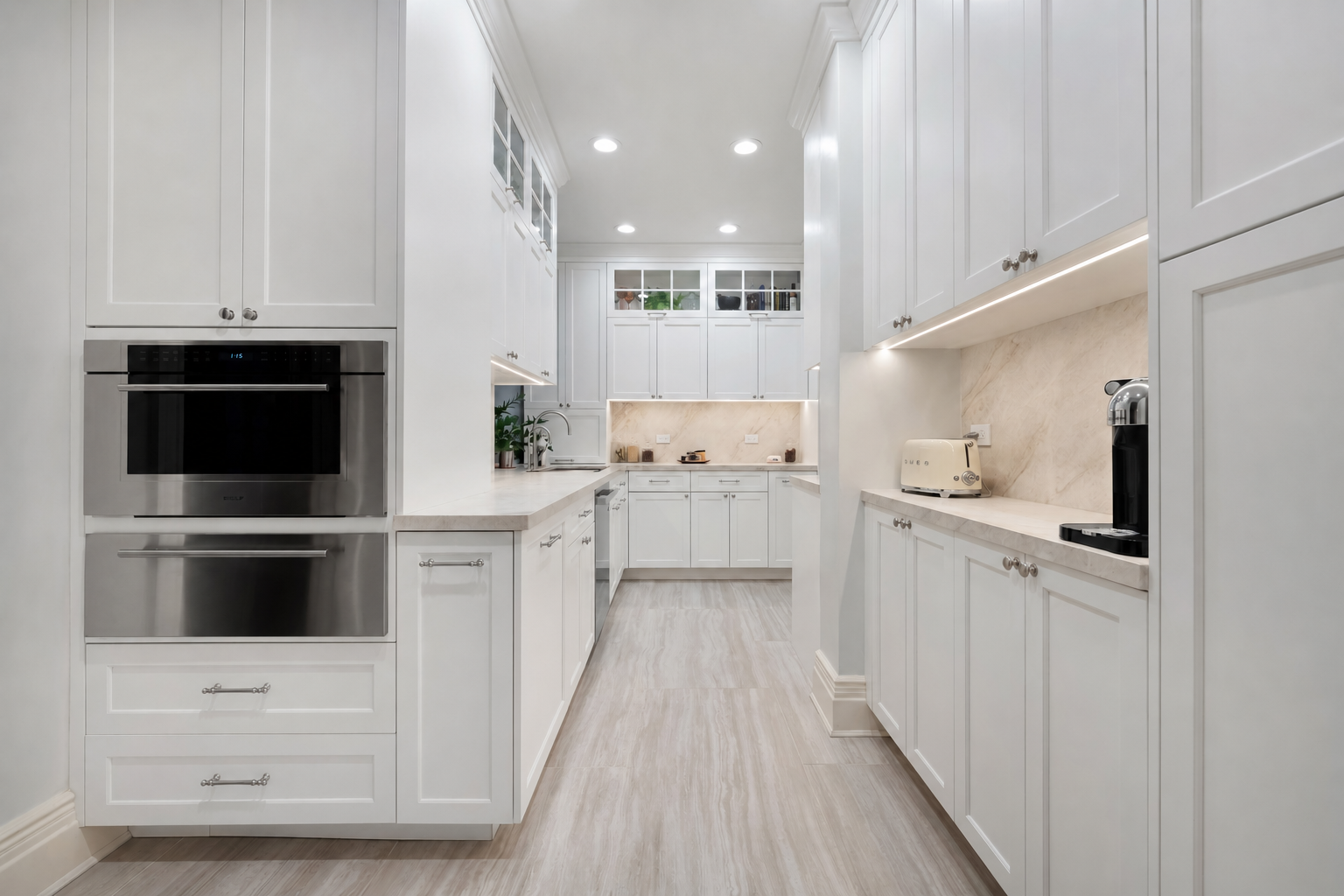
Yes. A cohesive, built-in appearance depends on the complete design and installation.
Aligned cabinet heights, coordinated end panels, appliance surrounds, consistent reveals, and carefully planned trim can make a significant difference.
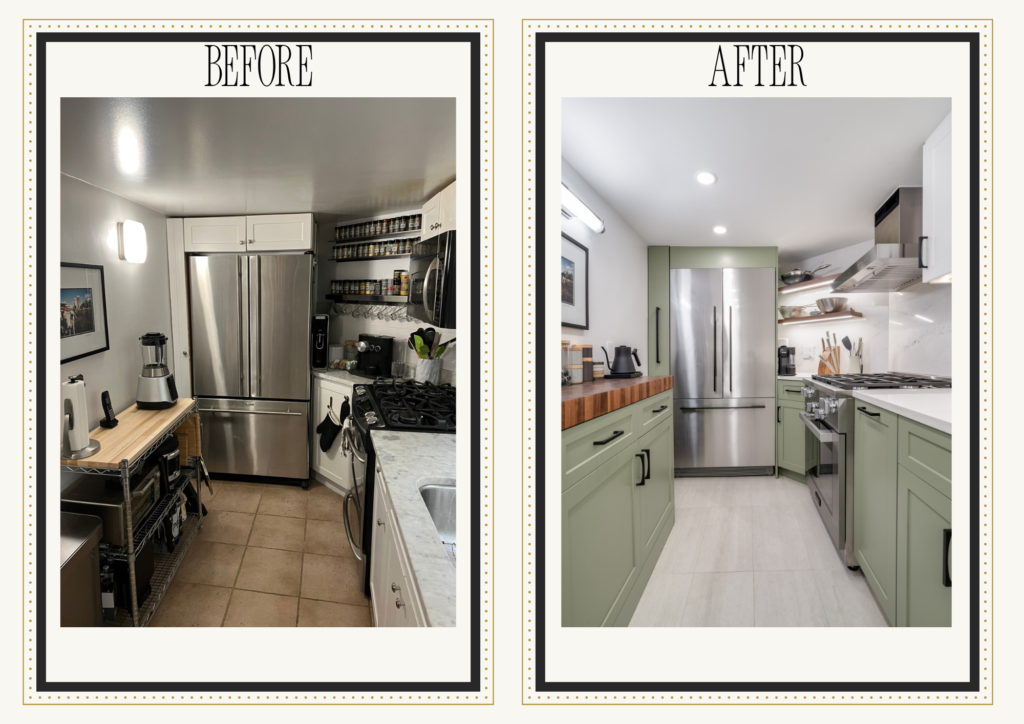
Klein’s West Village kitchen renovation illustrates the importance of planning the refrigerator wall and storage together. The project incorporates ceiling-height cabinetry, coordinated panels, and a pull-out pantry to improve an awkward area.
The lesson is to evaluate what the completed cabinet arrangement achieves. A project’s appearance alone does not establish whether every cabinet was fully custom.
How to Choose Between Custom and Semi-Custom Cabinets
Start with the layout and your priorities, then test the available cabinetry against them.
Semi-custom may be the right fit when the selected line delivers the dimensions, storage, finishes, and appliance integration you need.
Custom may be the right fit when a specific requirement cannot be achieved satisfactorily within that line.
Before approving a cabinet plan, ask:
- What does this option improve about the way I use the kitchen?
- Which details are included in the cabinet order?
- Which details will be completed during installation?
- Are appliance specifications and access requirements confirmed?
- What would I gain by choosing a different cabinet approach?
You should be able to understand the recommendation without becoming a cabinetry expert.
Planning Your NYC Kitchen with Klein
Cabinet selection is one part of a larger renovation. Layout, appliances, lighting, installation, and the surrounding finishes all need to work together.
Explore Klein’s NYC kitchen cabinet options to understand the available approaches, or learn about our kitchen remodeling services in NYC for help planning the complete space.
Bring your existing floor plan, kitchen photos, and a list of what frustrates you about the current arrangement. Those details provide a useful starting point for deciding where customization would make a difference.

Frequently Asked Questions
What is the main difference between custom and semi-custom kitchen cabinets?
Custom cabinets are fabricated to project-specific specifications. Semi-custom cabinets use a manufacturer’s established range with available choices and modifications. The amount of flexibility varies by cabinet line and fabricator.
Are semi-custom cabinets suitable for small NYC kitchens?
They can be. Suitability depends on the available dimensions, permitted modifications, storage options, and appliance requirements. A small kitchen does not automatically require fully custom cabinetry.
Do pre-war apartments need custom cabinets?
Not necessarily. Existing walls, ceilings, services, and architectural details should be measured and assessed first. Some conditions can be addressed through semi-custom options and installation details; others may benefit from custom fabrication.
Are custom cabinets always better than semi-custom?
No. Compare the proposed fit, construction, finish, hardware, storage, and installation. Custom cabinetry is most useful when its additional flexibility solves a specific design requirement.
Can semi-custom cabinets extend to the ceiling?
They can when the manufacturer’s available cabinet heights and detailing options suit the room. Ceiling conditions, trim, proportions, and installation allowances must be evaluated before ordering.
Which cabinets should I choose for a full kitchen renovation?
Choose the approach that meets the approved layout and specifications. Resolve storage needs, appliance models, finishes, dimensions, and installation details before making the final selection.