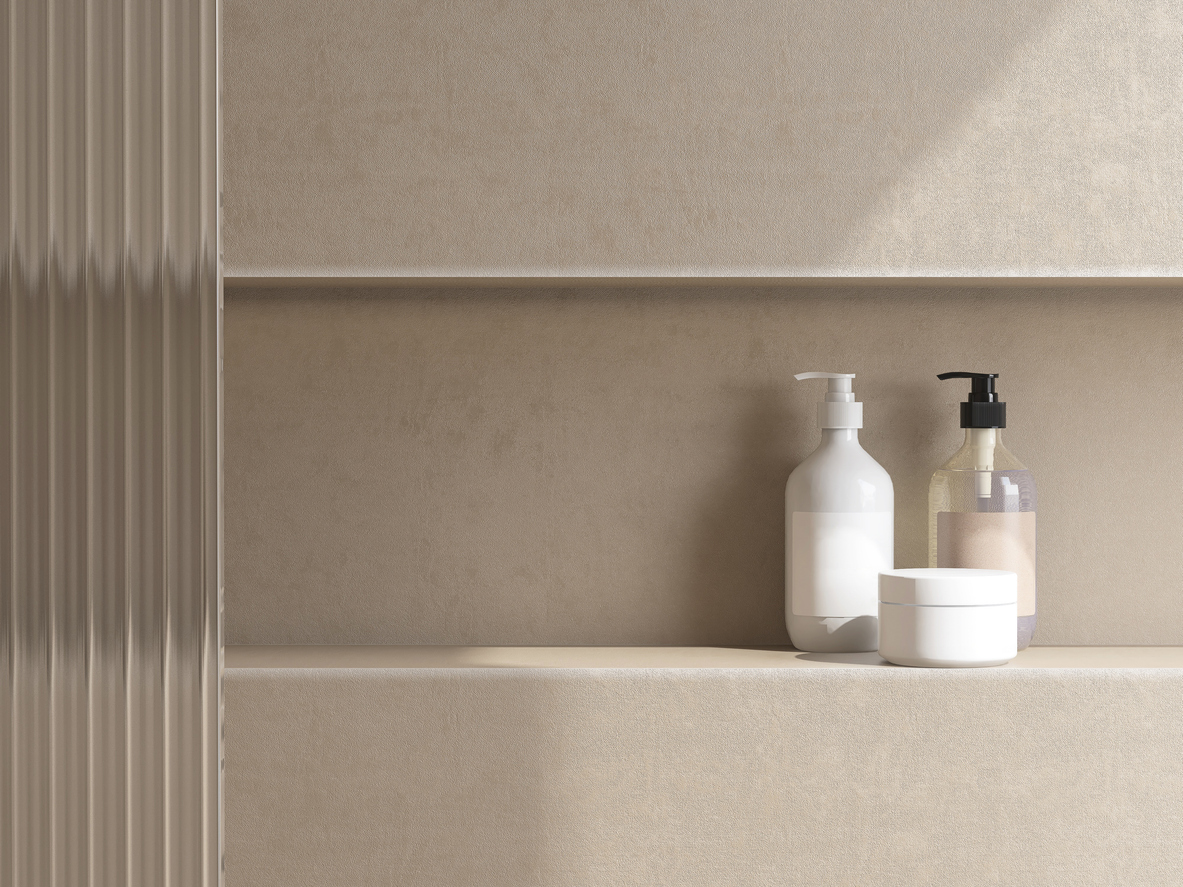
A shower niche looks simple: a recessed shelf built into the shower wall. But when it is placed well, it can make the entire shower feel cleaner, calmer and easier to use.
Instead of balancing bottles on the floor or hanging a bulky organizer from the showerhead, you get storage that feels like part of the design. The key is planning it before the tile work begins.
So, should you add a shower niche? For most homeowners considering bathroom remodeling in NYC, the answer is yes—as long as its size, position and waterproofing are considered from the start.
What Is a Shower Niche?
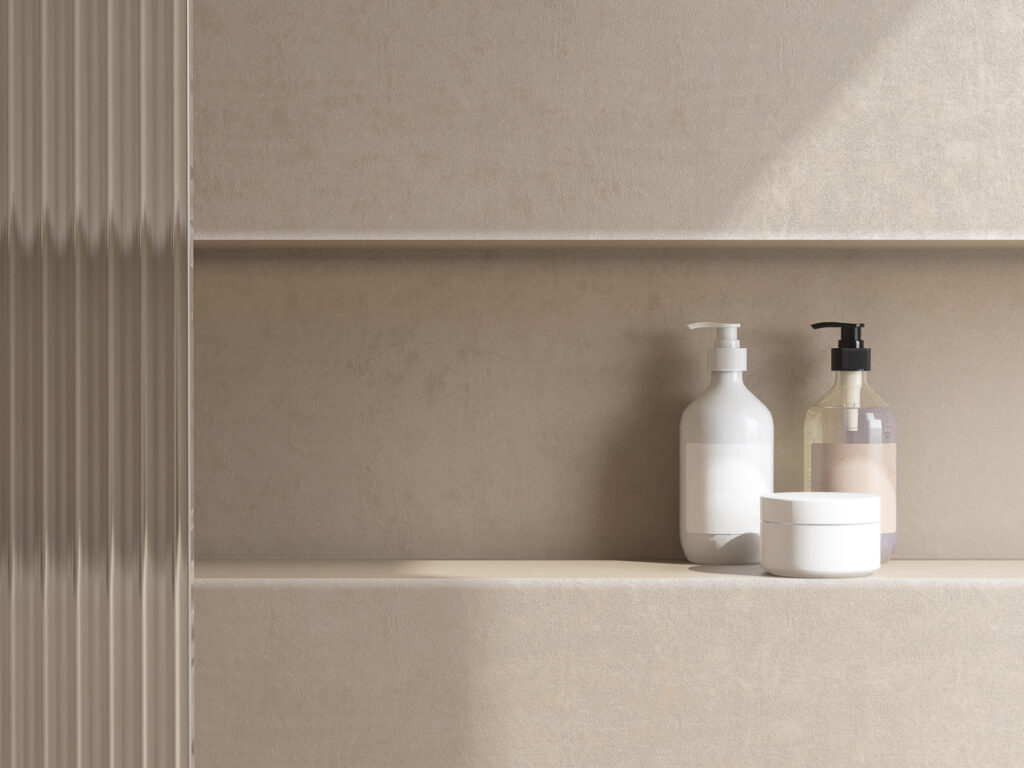
A shower niche is a recessed opening built into the wall of a shower or tub surround. It creates storage for shampoo, soap and other products without projecting into the bathing area.
Some niches are constructed on site, while others use prefabricated forms installed before waterproofing and tile. Either approach can work, but the finished niche must be coordinated with the wall structure, waterproofing system and tile layout.
A niche should not feel like something squeezed into an available space at the last minute. It works best when treated as part of the shower design.
Why Homeowners Like Shower Niches
The practical benefit is obvious: a niche keeps products off the floor and within reach. It also avoids the visual clutter of a temporary shower caddy.
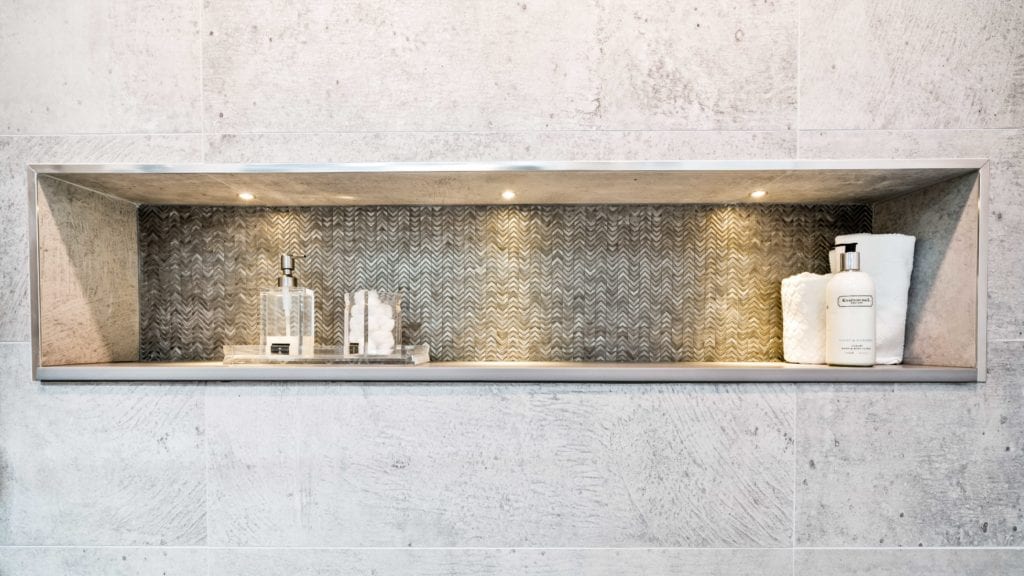
There is a design benefit, too. A niche can blend quietly into the wall when the same tile continues through it, or it can become a feature with contrasting tile, stone or a different pattern.
In a compact NYC bathroom, recessed storage is especially useful because it does not reduce the shower’s usable space. Even a relatively small niche can make the room feel more organized.
Where Should a Shower Niche Go?
The best shower niche placement depends on how the shower will be used and what is inside the wall.
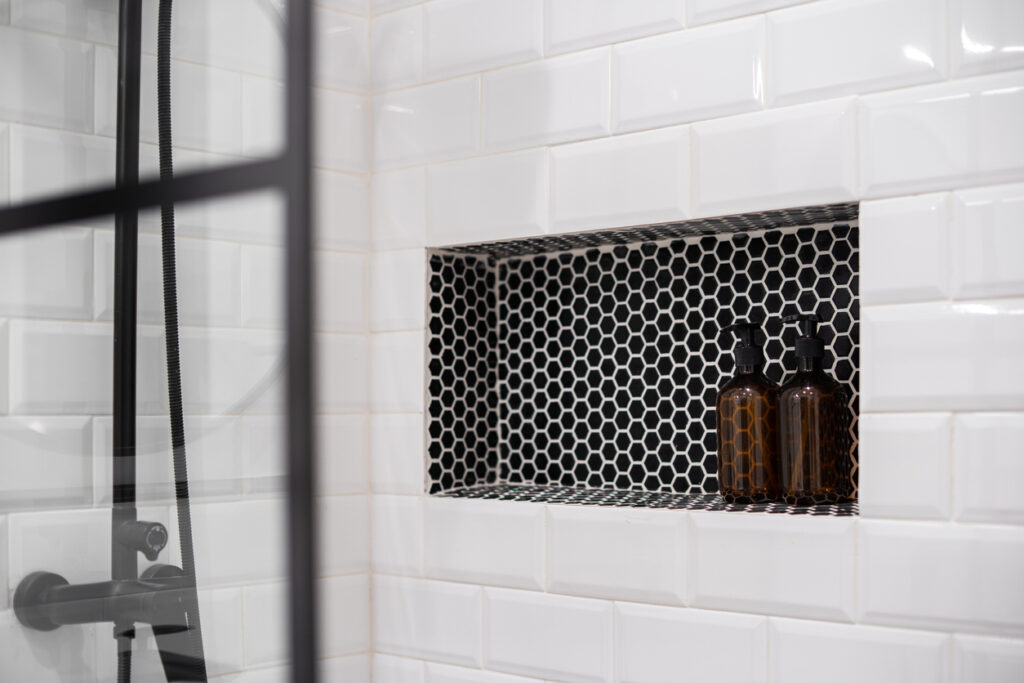
It should be easy to reach without requiring someone to bend too far or stand directly beneath the showerhead. Many homeowners prefer placing it on a side wall, where bottles are accessible but the niche is not the first feature visible through the glass.
Before settling on a position, the renovation team should consider studs, plumbing lines and other conditions inside the wall. A location that looks perfect in an inspiration photo may not work in a particular bathroom.
If more than one person uses the shower, think about what will actually be stored there. A niche that holds two small bottles in a rendering may feel inadequate once the bathroom is in use.
Should the Niche Be Vertical or Horizontal?
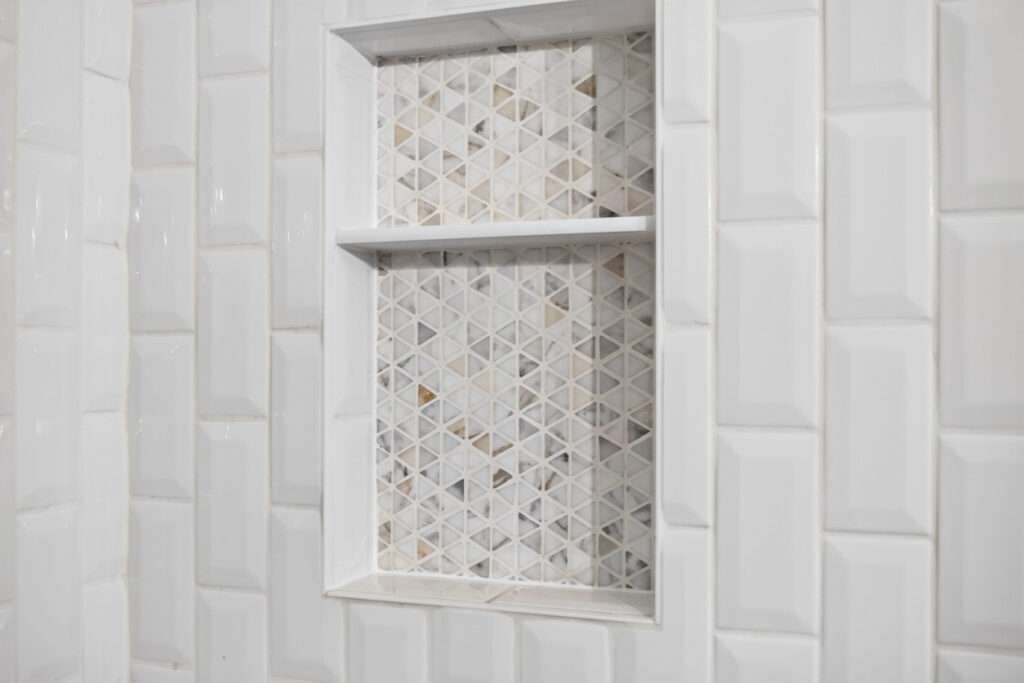
A vertical shower niche works well when wall space is limited. It can include a shelf that separates taller bottles from smaller products without making the opening unusually wide.
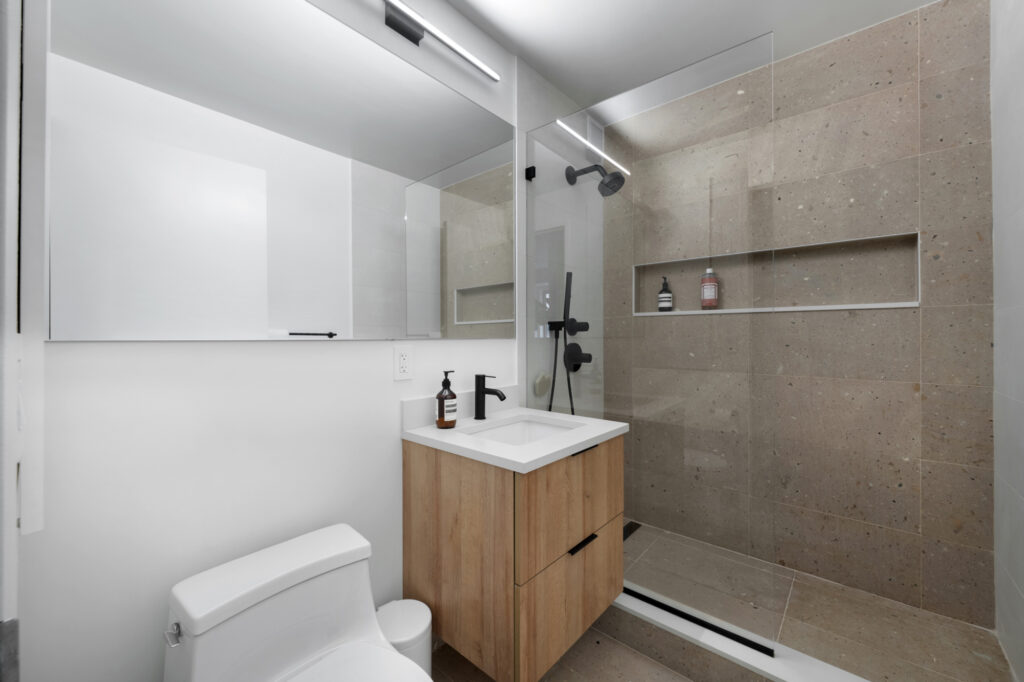
A horizontal niche creates a longer visual line and offers more storage. It can look striking across a large shower wall, but it may involve more framing and coordination behind the tile.
Neither orientation is automatically better. The right choice depends on the shower dimensions, available wall space and tile pattern.
The niche should feel proportional to the shower. An oversized opening can dominate a small bathroom, while a tiny niche may look lost on a wide wall.
Should the Tile Match or Contrast?
Matching tile creates a quieter, more seamless result. This approach works particularly well in bathrooms with large-format tile or a minimal design.
Contrasting tile draws attention to the niche. Mosaic tile, a different color or a strong pattern can turn the opening into a focal point. The effect can be beautiful, but it should connect with another part of the room rather than feeling isolated.
Grout also changes the final appearance. Matching grout allows the tile to read as a continuous surface, while contrasting grout makes every edge and joint more visible. Klein’s guide to tile grout colors and selection explains how this small choice can alter the entire design.
Before deciding, review the niche tile, wall tile and grout together. A sample viewed on its own does not always reveal how busy or subtle the combination will feel once installed.
Waterproofing Matters More Than the Decorative Tile
A shower niche creates additional corners, seams and horizontal surfaces inside a wet area. That makes proper waterproofing essential.
Tile and grout are the visible finish, but they should not be treated as the complete water barrier. The Ceramic Tile Education Foundation’s wet-area guidance explains that tiled shower surfaces require an appropriate water-management system behind them. It also notes that niches and other horizontal shower surfaces should direct water toward the drain.
This is one reason a niche should be planned as part of the complete shower assembly rather than added after installation has started. The waterproofing, slope, tile edges and corners all need to work together.
These details are particularly important during bathroom remodeling in NYC, where a leak may affect the apartment below or create an issue with building management. Co-op and condo buildings may also have their own requirements for waterproofing and bathroom work.
If your renovation includes waterproofing, plumbing or changes to existing fixtures, review Klein’s guide to bathroom renovation permits in NYC before construction begins.
Common Shower Niche Mistakes
Most niche problems begin with late planning.
A niche may end up in an awkward position because the wall conditions were not checked. It may be too small for the products the household uses, or its edges may fail to align cleanly with the surrounding tile.
Another common issue is choosing the tile layout after the niche dimensions have already been fixed. This can leave narrow cuts or uneven grout lines around the opening.
Planning the niche, tile and wall together creates a more intentional result. The best installations often look simple precisely because the details were resolved before the work began.
Are There Alternatives to a Shower Niche?
A niche is not the only way to add shower storage.
A built-in corner shelf can be a good choice when recessing the wall is not practical. A shallow ledge may provide more continuous storage, while a carefully selected wall-mounted shelf can work in an existing shower that is not being completely rebuilt.
The right alternative depends on the bathroom and the scope of the renovation. If the shower walls are already being opened and waterproofed, a niche may be easier to incorporate naturally. For a smaller update, another form of storage may make more sense.
Is a Shower Niche Worth It?
A well-planned shower niche is usually worth adding when you want useful storage without sacrificing space. It keeps everyday products organized and can make the shower look more considered.
But it should not be treated as a purely decorative detail. Its placement needs to work for the people using the bathroom, and its construction must be coordinated with the wall, tile and waterproofing system.
Decide what the niche needs to hold, where it will be easiest to reach and whether you want it to blend in or stand out. Then include it in the design before tile installation begins.
Ready to Plan Your Shower?
A shower niche is only one detail, but it can make a noticeable difference in how the finished bathroom looks and functions.
Klein Kitchen and Bath can help you coordinate the shower layout, tile, grout, storage and waterproofing as part of a complete renovation.
Contact Klein Kitchen and Bath to schedule a bathroom design consultation.