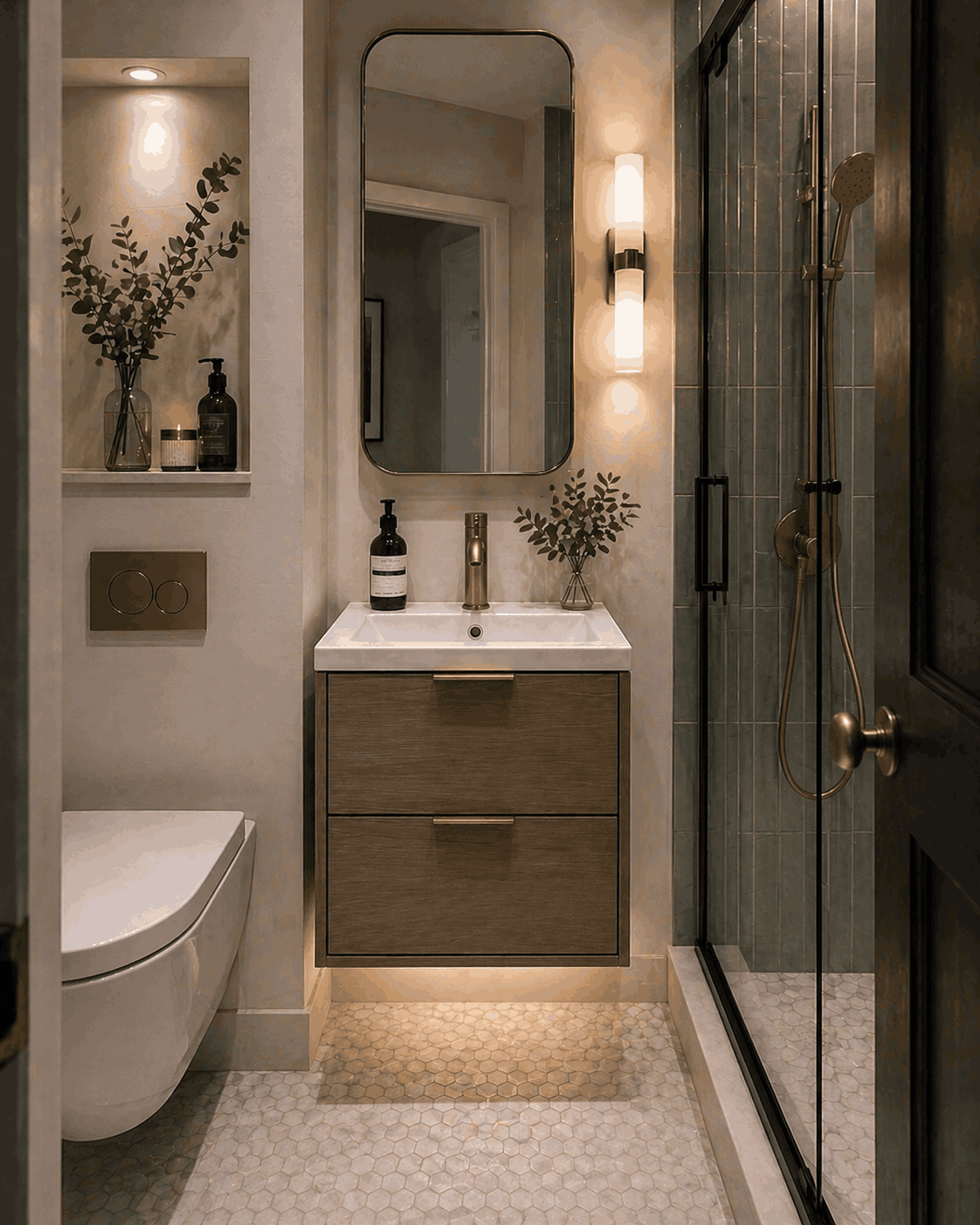
Most NYC bathrooms don’t feel small because of square footage—they feel small because of layout decisions that don’t work.
In many apartments, the issue isn’t size. It’s an oversized vanity, a poorly placed door, a bulky tub, or a layout that doesn’t reflect how the space is actually used day to day.
Since expanding a bathroom in NYC is often restricted by plumbing, co-op rules, and building approvals, the smartest bathroom remodeling in NYC projects focus on improving the layout within the existing footprint.
A well-planned layout can completely change how the space feels—without adding a single square foot.
Quick Answer: How Do You Make a Small Bathroom Feel Bigger Without Expanding?
You can make a bathroom feel larger without expanding by improving the layout:
- Replace a tub with a walk-in shower
- Use a floating or right-sized vanity
- Change the door swing or use a sliding door
- Add recessed storage
- Use glass to open sightlines
- Optimize around existing plumbing
These changes improve flow, visibility, and usability—making the space feel significantly larger.
Why Layout Matters More Than Size in NYC Bathrooms
In NYC apartments, bathroom design is shaped by real constraints. Plumbing stacks often limit how much fixtures can be moved, while co-op and condo rules can restrict larger layout changes. On top of that, narrow floor plans and limited storage tend to amplify even small inefficiencies.
Because of this, layout becomes the most important factor.
We often see bathrooms that technically “fit everything,” but still feel tight because the space wasn’t planned around movement, storage, and daily use.
How Klein Kitchen & Bath Redesigned an East 62nd Street Bathroom for More Space
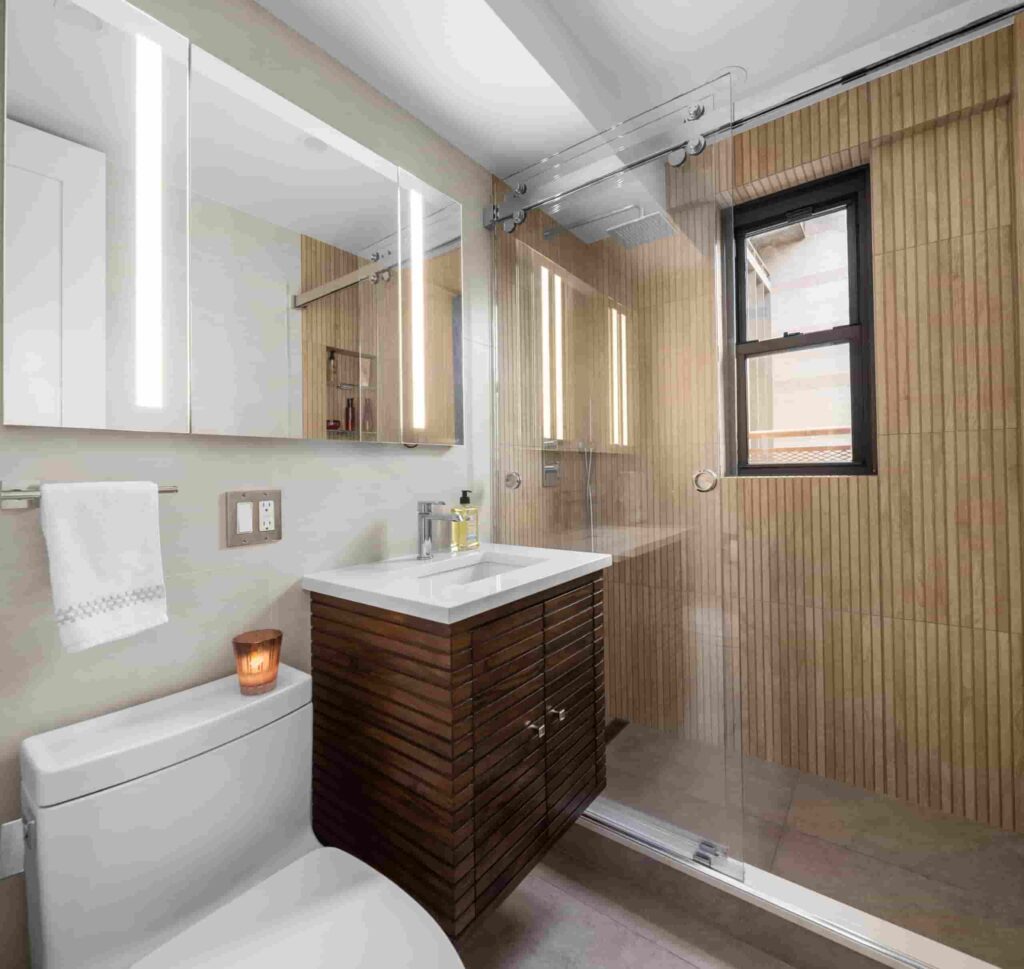
In an Upper East Side apartment on East 62nd Street, the bathroom felt cramped—not because of its size, but because of how the layout was structured.
The goal wasn’t to expand the space. It was to make it work better.
The biggest shift came from rethinking the shower. The existing tub was replaced with a frameless glass walk-in shower, allowing the full depth of the room to be visible instead of blocked. A sliding glass door eliminated the need for clearance, while recessed shelving provided storage without adding bulk.
The vanity was also redesigned to improve both flow and function. A floating vanity in a deep wood finish opened up the floor visually, while a white quartz countertop kept the space clean and bright. An LED-integrated mirror cabinet added hidden storage while improving lighting for daily use.
To reinforce the sense of space, vertical wood-accented tiles were used to visually elongate the walls. Neutral tones reduced visual clutter, and layered lighting made the entire bathroom feel brighter and more open.
Bathroom remodel projects like this show how thoughtful transformation of space creates bathrooms with the same footprint that feel significantly larger, more functional, and easier to use.
1. Fix the Door First — It Impacts the Entire Layout
A swinging door takes up valuable clearance and can limit how the rest of the bathroom is designed. In smaller NYC layouts, this often affects vanity placement, storage options, and overall movement.
In many cases, switching to a sliding or space-saving door improves flow immediately and allows the rest of the layout to work more efficiently.
2. Replace the Tub With a Walk-In Shower (When It Makes Sense)
Tubs take up both physical and visual space, which can make a bathroom feel more enclosed than it actually is.
A walk-in shower, especially with a glass enclosure, opens up the room and improves usability. It allows sightlines to extend across the space, which instantly makes the bathroom feel larger.
If you’re deciding between layouts, see our guide on tub-to-shower conversions in NYC.
3. Right-Size the Vanity (Most Common Layout Mistake)
Oversized vanities are one of the most common reasons bathrooms feel cramped and the need arises for bathroom remodeling.
Even reducing the width slightly can improve walkway clearance, reduce congestion, and allow the rest of the layout to function better. In most NYC bathrooms, a well-designed vanity with drawers will outperform a larger cabinet that takes up unnecessary space.
4. Use Floating Elements to Open the Space
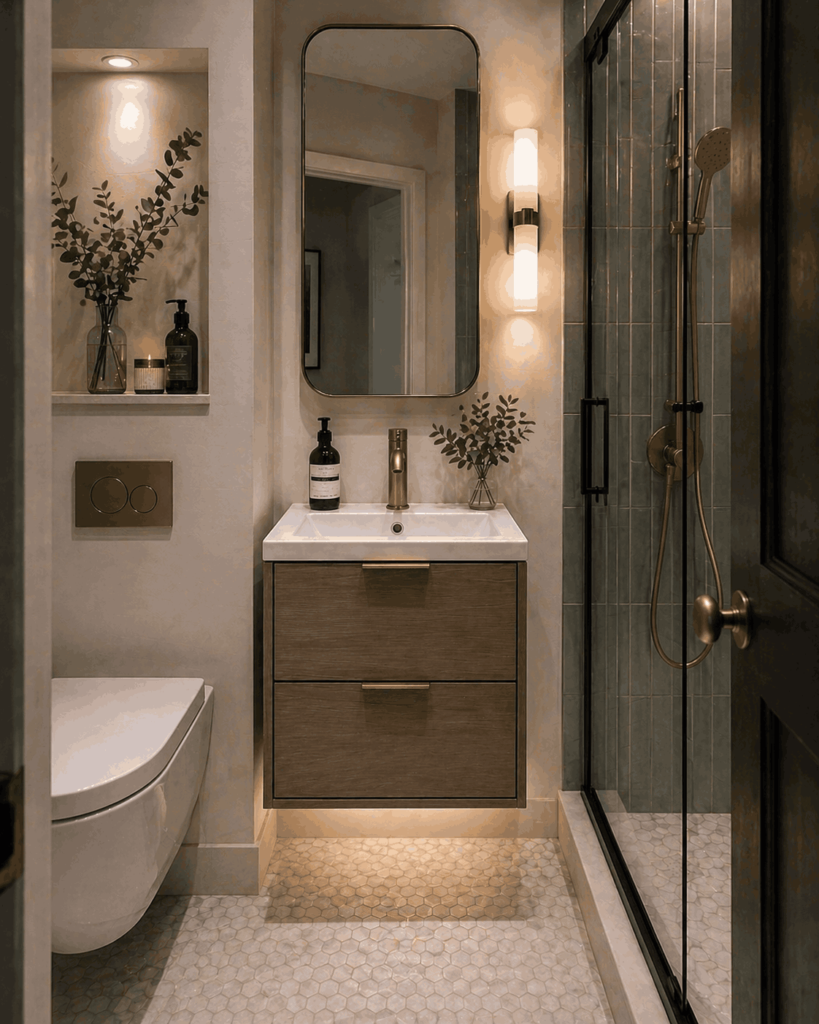
Floating vanities create visible floor space, which helps the bathroom feel more open at a glance.
This is especially effective in narrow layouts or bathrooms where the vanity is directly visible from the entrance, as it reduces visual weight and makes the space feel less crowded.
5. Use Recessed Storage Instead of Bulky Cabinets
Most small bathrooms don’t need more storage—they need better-placed storage.
Recessed medicine cabinets, shower niches, and built-in shelving allow you to store essentials without interrupting the layout or taking up additional space.
For a full planning approach, see our bathroom remodel checklist for NYC homeowners
6. Work With Existing Plumbing
In many NYC co-ops and condos, moving plumbing is limited, expensive, or not approved.
Rather than forcing a completely new layout, better results often come from working within those constraints—keeping key fixtures in place while improving spacing, proportions, and usability around them.
7. Improve Sightlines to Make the Room Feel Bigger
A bathroom feels smaller when the eye is stopped by visual barriers.
Using glass enclosures, consistent materials, and clean alignment allows the eye to move freely across the space. This creates a more open and cohesive feel, even without changing the footprint.
8. Use Tile Direction and Scale Strategically
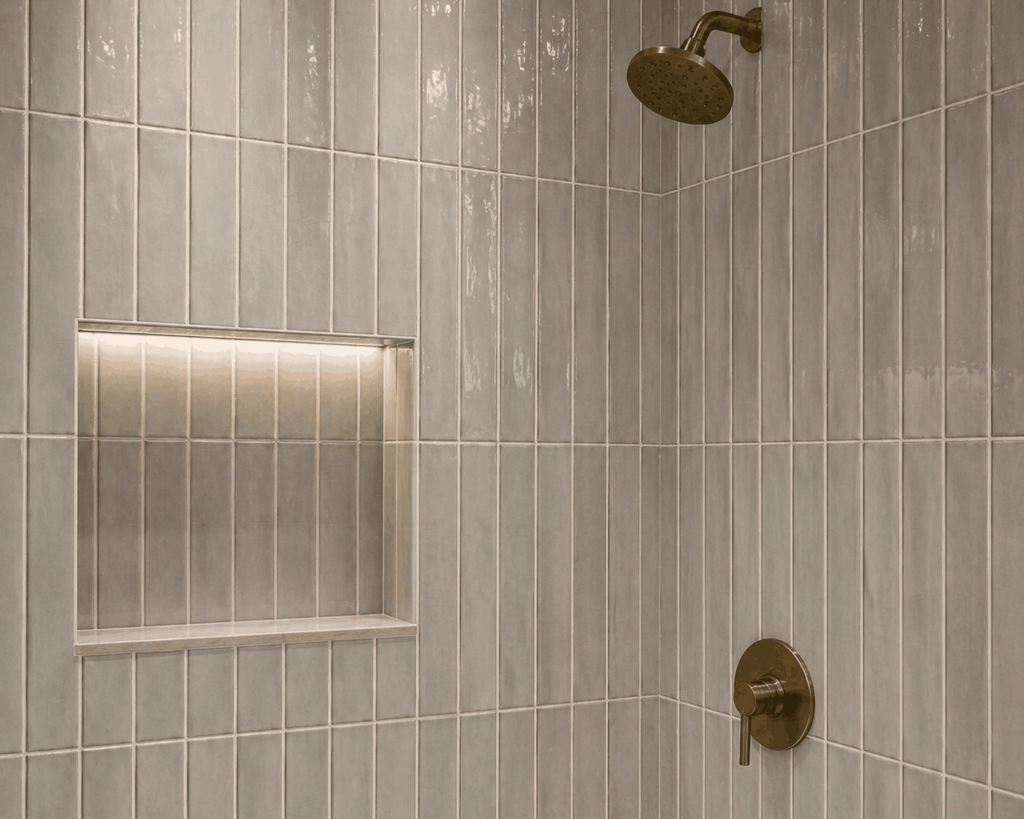
Tile is not just a finish—it can influence how the space is perceived.
Vertical tile can make walls feel taller, while larger tiles reduce grout lines and visual breaks. When used correctly, tile layout supports the overall design and reinforces a sense of openness.
9. Design Around Daily Use
A bathroom that works well will always feel larger.
Before finalizing a layout, think through how the space is actually used:
- How the door functions in real use
- Access to storage and towels
- Shower usability
- Clearance between fixtures
When the layout supports daily routines, the entire space feels more comfortable and efficient.
Common Bathroom Layout Mistakes in NYC Apartments
- Oversized vanities that restrict movement
- Poor door placement limiting layout options
- Lack of built-in storage
- Bulky tubs in tight layouts
- Ignoring how the space is actually used
Most of these are layout issues—not size limitations.
The Bottom Line
You don’t need to expand your bathroom to make it feel bigger.
In NYC apartments, the right layout changes—from door placement to shower design to storage—can completely transform how the space looks and functions.
If your bathroom feels tight or poorly laid out, the issue may not be the size—it may be the layout.
At Klein Kitchen & Bath, we help NYC homeowners rethink their space before any work begins, designing bathrooms that work within real building constraints while improving flow, usability, and long-term value.
Schedule a free consultation to explore what’s possible in your space.
A better bathroom doesn’t start with finishes.
It starts with a smarter layout.
FAQs
Can you make a bathroom bigger without expanding?
Yes. By improving layout, reducing bulky fixtures, using glass enclosures, and optimizing storage, a bathroom can feel significantly larger without increasing its size.
Is it worth replacing a tub with a shower in NYC?
In many NYC apartments, a walk-in shower improves space and usability, but keeping at least one tub may still be important for resale.
What is the biggest mistake in small bathroom design?
The most common mistake is using an oversized vanity, which restricts movement and makes the bathroom feel cramped.