A deep cabinet can hold plenty and still be frustrating to use. The saucepan you need is behind three others. Pantry items disappear at the back. The stand mixer stays on the counter because putting it away is too much work.
Kitchen cabinet pull-outs can make those spaces easier to use by bringing stored items toward you. But the right solution depends on what you store, how the cabinet opens, and where you stand when using it.
Some kitchens benefit most from simple rollout shelves. Others need a dedicated trash pullout, pantry drawers, or a better way to reach a corner. Here’s how to decide which options deserve space in your kitchen—and which you can skip.
Which Kitchen Cabinet Pull-Out Is Right for You?
Start with the problem you want to solve.
| If this happens in your kitchen… | Consider… | Check before choosing |
|---|---|---|
| Pots disappear behind other cookware | Rollout shelves or deep drawers | Weight capacity and room for handles |
| Pantry items get lost at the back | Individually sliding pantry shelves | Shelf spacing and bottle height |
| Trash bins interrupt the room | A trash and recycling pullout | Bin capacity and proximity to food preparation |
| Small bottles crowd the counter | A narrow spice or bottle pullout | Usable shelf width and distance from heat |
| Corner storage is difficult to reach | A corner mechanism or revised cabinet layout | Opening size, movement, and accessible capacity |
| A heavy mixer rarely gets put away | An appliance lift | Appliance dimensions, weight, and operating clearance |
Choose the contents first, then the mechanism. A storage accessory works best when you already know what belongs inside it.
1. Rollout Shelves for Deep Base Cabinets
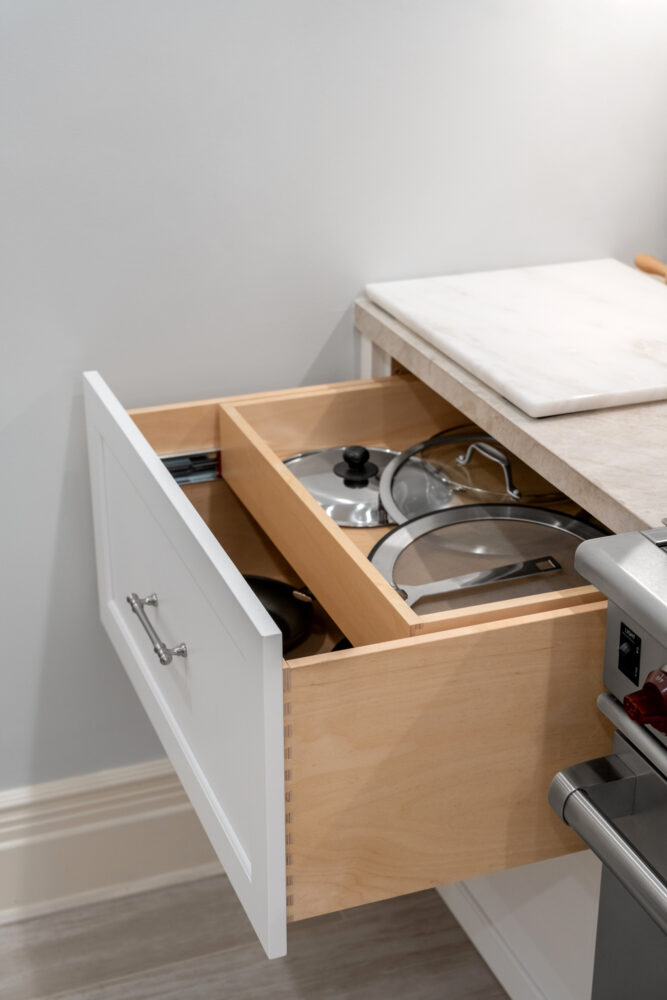
Rollout shelves are sliding trays installed inside a cabinet, usually behind a hinged door. Open the door, pull the tray forward, and items at the back become easier to see and reach.
They can work well for pots, mixing bowls, food containers, and small appliances that are awkward to retrieve from a fixed shelf.
Pay attention to how far the shelf extends. A partially extending tray may still leave the rear difficult to access. Also check the usable width: slides, mounting hardware, and cabinet hinges occupy space.
For cookware, test the arrangement with your largest pot and its handles. A tray that looks generous when empty can become crowded quickly.
Best fit: a sound existing cabinet whose depth is useful but difficult to access.
 Riverside Drive Full Apartment Renovation
2. Pullout Pantry Shelves for Food You Can Actually Find
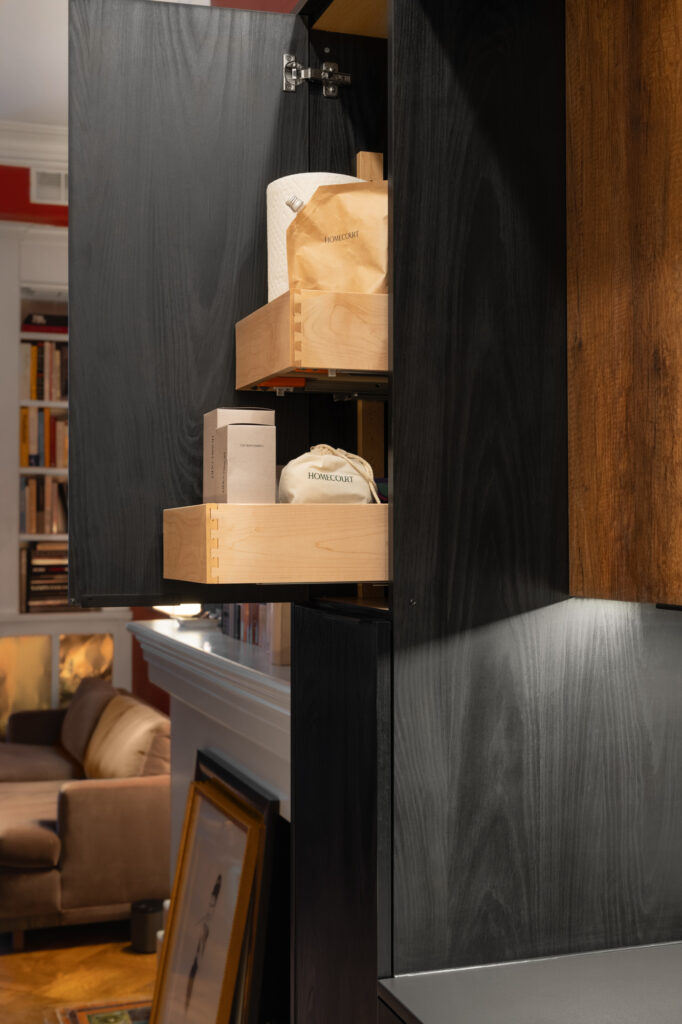
Pantry pullouts make it easier to see what you have before buying another jar or packet.
There are two main approaches:
-
- A tall pullout unit: the storage assembly moves together.
-
- Individual interior pullouts: separate shelves or drawers slide out independently behind a pantry door.
A tall unit can make a narrow space useful. Individual pullouts let you open only the level you need and organize different categories separately.
Compare them using your groceries. Tall cereal boxes, cooking oils, canned goods, and small spice jars need different shelf spacing. Adjustable shelves can help, but their available positions and weight limits still matter.
In a compact kitchen, also consider how the pantry works when open. Can another person pass? Can you reach the refrigerator without closing it?
 Upper East – Kitchen Remodeling Project
3. Trash and Recycling Pullouts Near the Preparation Area
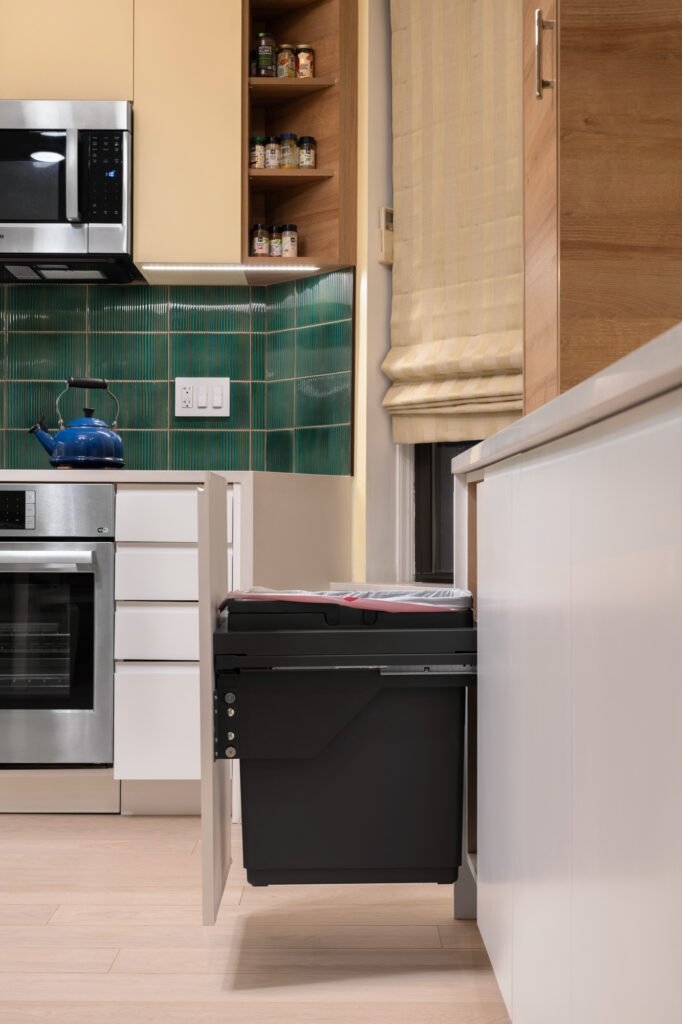
A trash pullout keeps bins behind a cabinet front and places disposal within the working kitchen.
Its location often matters more than its appearance. Think about where you peel vegetables, open packages, scrape plates, and unload groceries. A bin near that activity can reduce unnecessary movement.
Before choosing one, check:
-
- Whether the bins suit your household’s trash and recycling routine.
-
- Whether liners and replacement bins are easy to obtain.
-
- How easily you can remove the bins for cleaning.
-
- Whether the open pullout conflicts with the dishwasher or nearby drawers.
Under-sink placement can work in some kitchens, but plumbing, a disposal, filtration equipment, or leak-detection devices may limit the space. A separate cabinet can offer a simpler arrangement when the layout allows it.
 West 56th Street, New York, NY – Kitchen Remodeling Project
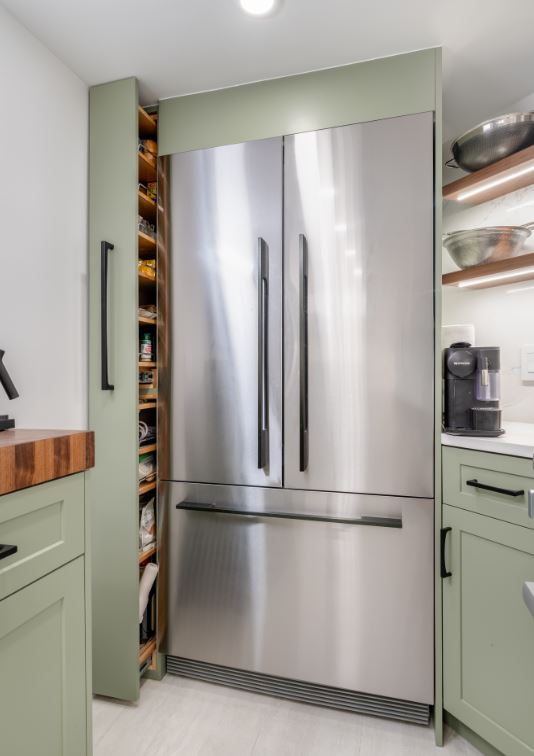
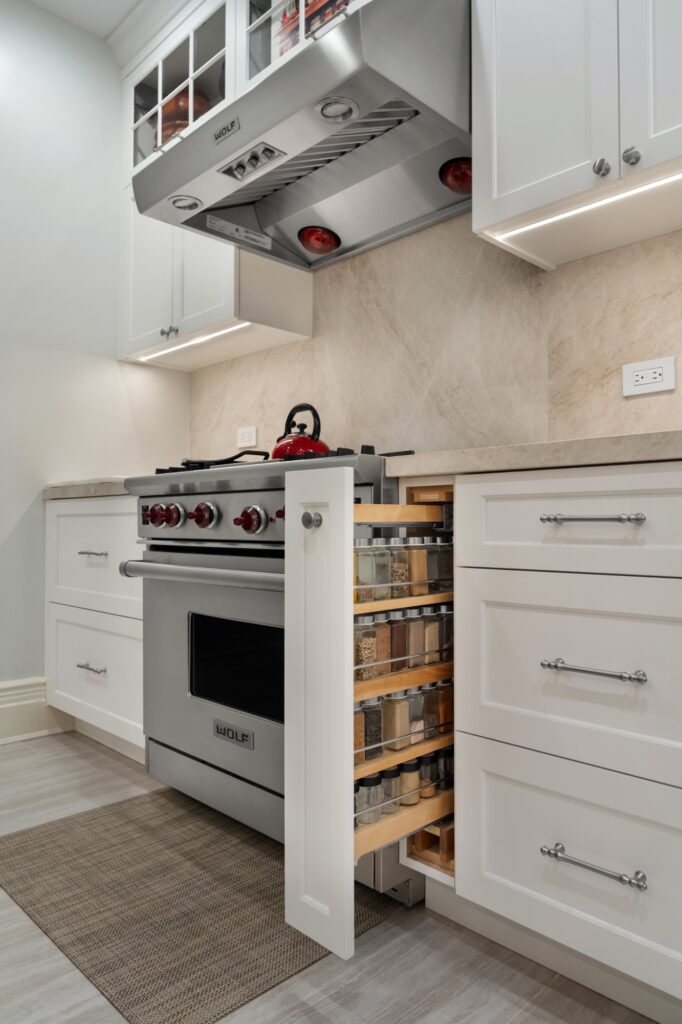
4. Narrow Pullouts for Spices, Oils, and Everyday Cooking Items
A narrow pullout can put frequently used cooking items within reach without leaving them on the counter.
It works best when its contents are specific: spice jars, a few bottles, or cooking utensils in a compatible organizer.
Avoid assuming that every leftover gap should become a pullout. A very narrow mechanism may provide less useful storage than expected once the frame, rails, and clearances are included. That width might serve the kitchen better as part of a wider drawer cabinet.
Check bottle height, shelf access, and the selected appliance’s installation requirements. Food-storage conditions matter too; spices and oils should not be exposed to unnecessary heat.
The question is whether you will use it comfortably—not simply whether it fits.
 West Village NYC – Kitchen Remodeling
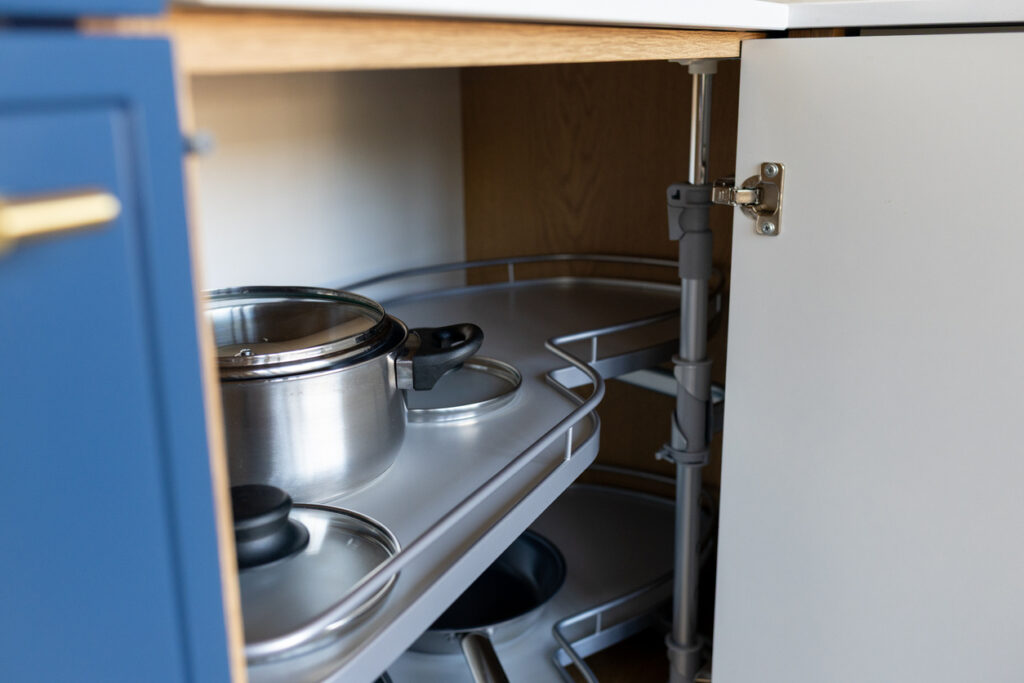
5. Corner Pullouts for Awkward Cabinets
Corner mechanisms can bring shelves out from a cabinet that would otherwise be difficult to reach. Depending on the system, shelves may swing, slide, or move in stages.
They can improve access, but the hardware occupies space, and the shelf shapes may restrict what fits. Compare the usable storage with your actual cookware rather than judging the mechanism empty.
If you are replacing the kitchen, also compare a different cabinet arrangement. Giving up an awkward corner in exchange for wider, accessible drawers can sometimes produce a better result.
A corner pullout is most useful when it solves a reach problem that the overall layout cannot resolve more effectively.
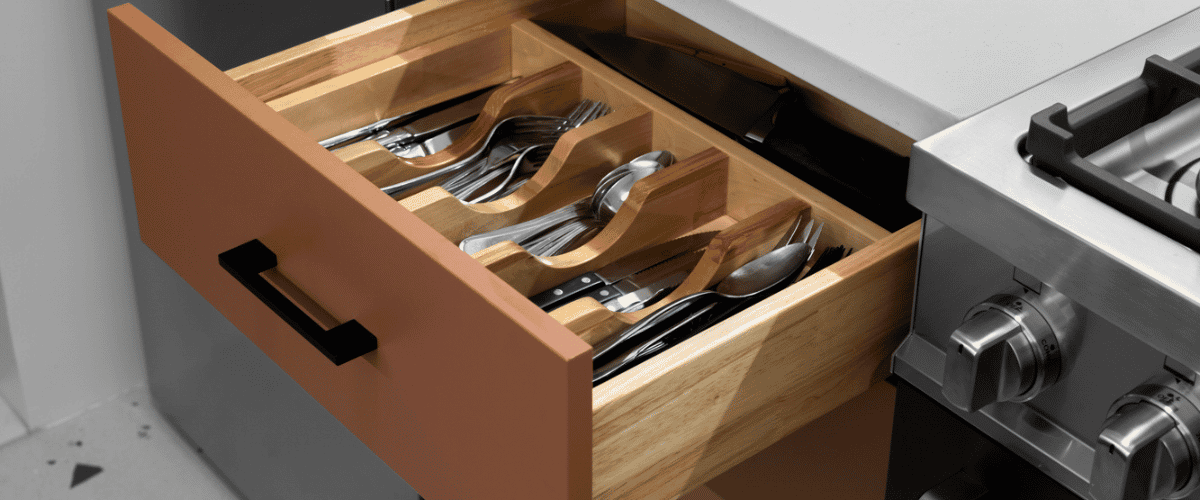
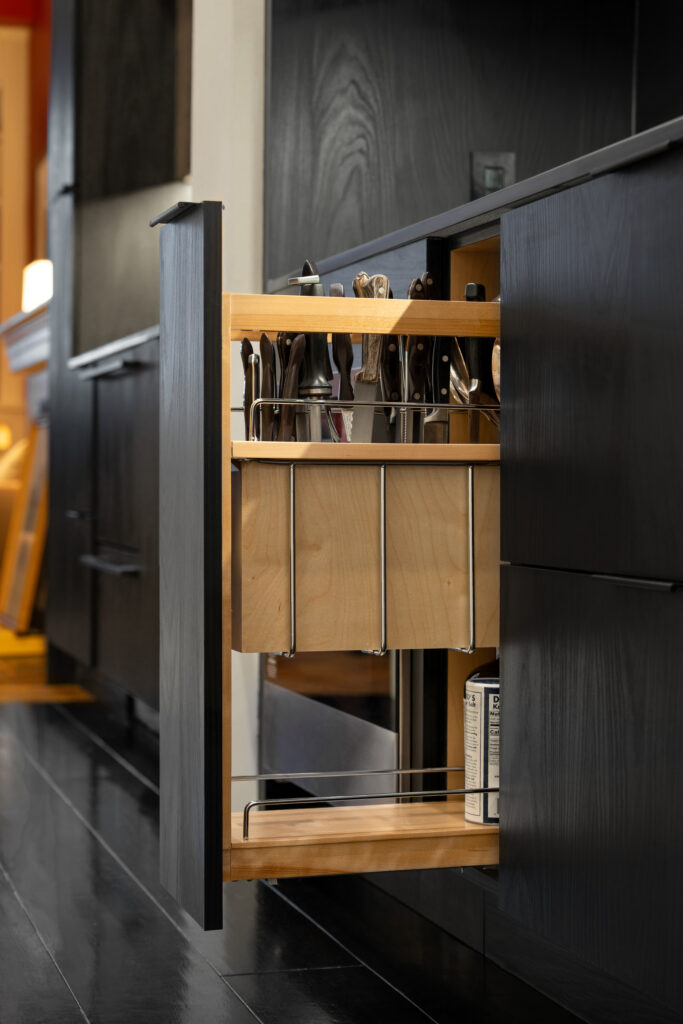
6. Hidden Drawers for Cutlery and Small Tools
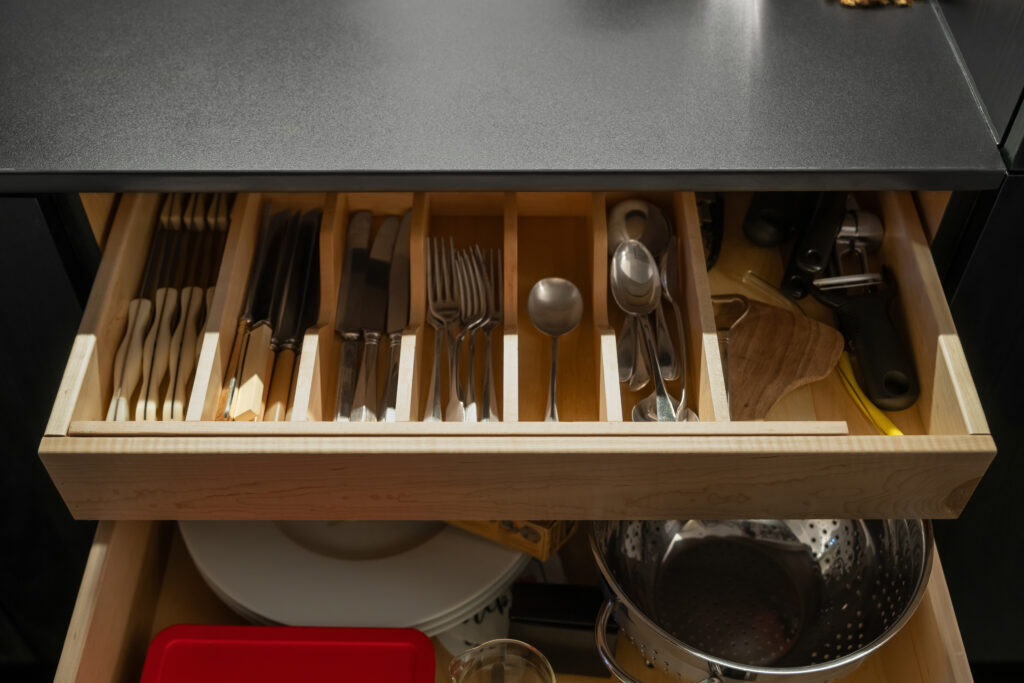
A concealed drawer sits behind a larger cabinet or drawer front. It can separate cutlery, utensils, or smaller tools while maintaining a simpler exterior appearance.
The tradeoff is access. Depending on the design, reaching the inner drawer may require opening the outer front first, then pulling the concealed drawer.
That extra step may be perfectly acceptable for occasional-use tools. For cutlery you reach for several times a day, try the movement before committing.
Check the usable height, too. Dividers, drawer construction, and hardware all affect whether larger utensils fit comfortably.
 Part of Upper East Side kitchen remodeling project done by Klein Kitchen and Bath
7. Appliance Lifts for Heavy Mixers
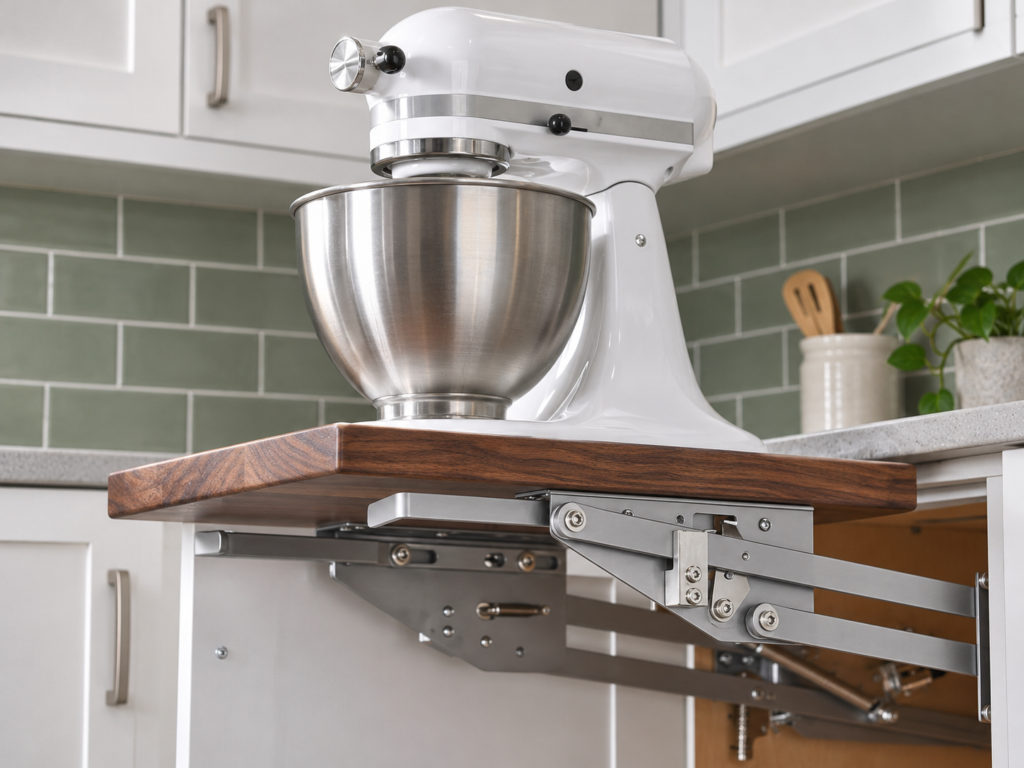
An appliance lift stores a mixer or compatible appliance inside a base cabinet and raises it toward working height.
It can be helpful when lifting the appliance is difficult or when clear counter space is a priority. But it dedicates a substantial portion of a cabinet to one item.
Compatibility is specific to the lift and appliance. Confirm weight capacity, shelf size, stored height, mounting requirements, and clearance throughout the movement. Some systems require a full-height cabinet without a drawer above.
If the appliance will operate on the raised platform, confirm that the manufacturer permits that use and that the installation provides the required stability and electrical access.
For an appliance you use every morning, a permanent counter location may still be more convenient. For a heavy mixer used regularly but less often, a lift may be worth the cabinet space.
Pullout Shelves or Deep Drawers?
If you are keeping your cabinets, adding roll-out shelves may be a practical improvement.
If you are replacing the cabinetry, compare them with deep drawers before deciding.
Drawers generally provide direct access in one movement. Rollouts behind doors usually require opening the door before extending the shelf. Both can work well; the better choice depends on the contents, cabinet system, and layout.
For pots and everyday dishes, drawers deserve serious consideration. For a tall pantry or an existing base cabinet, interior pullouts may be the more useful solution.
You do not need a special mechanism in every cabinet. A combination of drawers, fixed shelves, and selected pullouts often provides a more balanced kitchen.
 Part of an apartment renovation completed by Klein Kitchen & Bath on Riverside Drive
Can You Add Pullouts to Existing Kitchen Cabinets?
Often, yes—provided the cabinet is suitable for the selected system.
Measure the clear opening, rather than relying on the cabinet’s nominal width. Hinges, face frames, center dividers, plumbing, and other obstructions can affect the fit.
Before ordering, confirm:
-
- Clear opening width, interior depth, and available height.
-
- Door opening angle and hinge interference.
-
- Suitable mounting surfaces and cabinet condition.
-
- Clearance around nearby walls, handles, and appliances.
-
- The product’s installation requirements and load rating.
Some rollouts are designed for retrofitting. Other accessories are easier to coordinate when ordering new cabinets.
Adding storage hardware will not resolve a poorly positioned appliance or a cabinet layout that interrupts the kitchen’s workflow. Establish whether the problem is inside the cabinet or in the layout itself.
Do Pullouts Require Custom Cabinets?
No. Many semi-custom cabinet lines offer compatible pantry systems, waste-bin cabinets, interior drawers, and other storage accessories.
Custom cabinetry may be useful when a particular dimension or arrangement cannot be achieved within the available cabinet system. It is not automatically necessary for better storage.
Our guide to custom vs. semi-custom kitchen cabinets explains how to compare fit, storage, construction, and flexibility before deciding which approach your kitchen needs.
Planning Pullouts in a Small or One-Wall Kitchen
A pullout needs room outside the cabinet as well as inside it.
Think about the kitchen with the pantry, dishwasher, refrigerator, and trash cabinet open. Check where you would stand and whether one opening blocks another.
In a one-wall kitchen, each cabinet also competes for a limited stretch of wall. A tall pantry may provide food storage but reduce available countertop. A narrow pullout may be useful—or it may take width away from a more practical drawer bank.
If you are deciding how to arrange that run of cabinetry, explore our one-wall kitchen layout guide alongside your storage choices.
Plan storage around the tasks: food near preparation, cookware near cooking, and dishes where unloading them is comfortable.
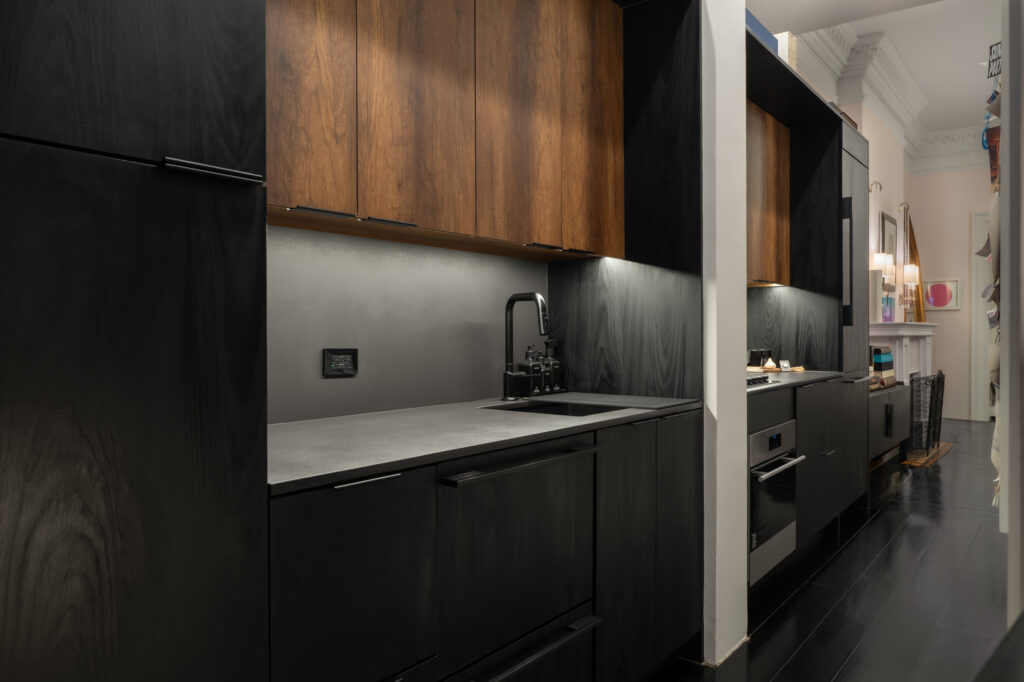 Upper East Side One Wall Kitchen Remodeling Project by Klein Kitchen and Bath
What Makes Cabinet Pullouts Cost More?
The installed price depends on the mechanism, cabinet modifications, installation, and surrounding finishes.
A simple retrofit tray is a different scope from a tall pantry assembly or a corner system. Door-mounted accessories may require front alignment and adjustment. Existing cabinets may need additional preparation.
When comparing estimates, ask what is included: hardware, trays or bins, mounting materials, cabinet work, installation, and adjustment.
If the budget is limited, prioritize the cabinets that frustrate you every day. Two well-chosen improvements can be more valuable than several accessories you rarely use.
Plan the Storage Before You Order the Kitchen
Before approving cabinetry, make a short inventory of what needs a home: cookware, dishes, groceries, cleaning supplies, small appliances, and waste bins.
Then ask your designer to show where those items go on the cabinet plan. Check the largest pieces, the opening movements, and the relationship between neighboring cabinets.
For a full renovation, storage works best when it is coordinated with the layout, appliances, and installation. Explore how Klein plans and builds NYC kitchens to see how those decisions come together.
Bring photos of your current cabinets—and a list of the things that make them difficult to use. That is a more useful starting point than choosing accessories from a catalog alone.
Frequently Asked Questions
Do cabinet pullouts increase storage space?
They primarily improve access. Hardware occupies some interior space, so a pullout does not necessarily increase physical capacity. Its benefit is making existing storage easier to see, reach, and use.
Can pullout shelves hold heavy pots and appliances?
Some can, but capacities vary by product and installation. Check the selected system’s load rating, the weight of its contents, and the cabinet’s suitability before ordering.
Are kitchen cabinet pullouts worth it?
They can be when they solve a frequent problem, such as reaching deep cookware or sorting recycling. They are less valuable when the mechanism reduces useful space or adds unnecessary steps to something you use constantly.
What should you choose first: cabinets or pullout accessories?
Plan them together. Accessories have specific dimensional and mounting requirements, so confirm compatibility before the cabinet order is finalized.